Featured Micro & Mini Modular Fixation Systems
Precision-Engineered Surgical Trauma Instruments & Certified Implants for Hospital Procurement
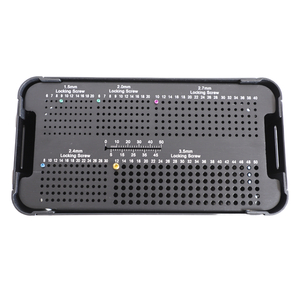
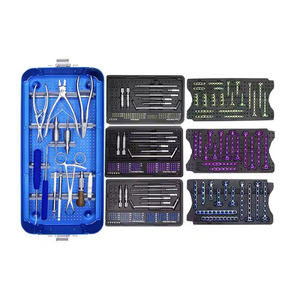
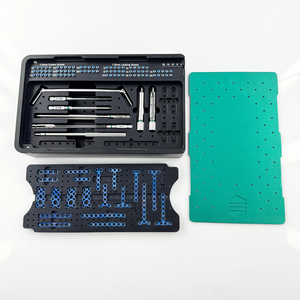
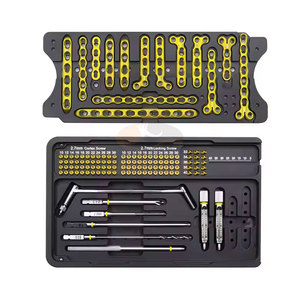
Executive Summary: Biomechanical Integrity & Clinical Intent of Monolateral Rail Fixators
Modern orthopedic reconstructive surgery relies heavily on rigid, precise, and modular external fixation hardware. For complex limb lengthening, non-union corrections, pediatric deformities, and severe high-energy trauma management, monolateral rail fixator systems represent a cornerstone clinical device class. As hospitals, trauma centers, and medical device distributors across the Greater Toronto Area (GTA) evaluate strategic vendors, the alignment of high manufacturing standards (CE Mark under EU MDR 2017/745, ISO 13485, CDSCO clearances) with direct-to-hospital economics has become a primary driver of supply chain resilience.
This technical report serves as a clinical procurement guide and biomechanical evaluation framework for Canadian orthopedic surgery departments, specialized trauma networks, and medical hardware supply chains seeking high-grade, cost-efficient CE Certified Orthopedic Rail Fixator Manufacturers capable of servicing Ontario's health network infrastructure.
Technical Anatomy & Material Metallurgical Specifications
Orthopedic rail fixators undergo severe cyclical physiological loads during full weight-bearing recovery phases. Failure at the clamp pin interface, thread stripping on distraction screws, or micro-flexure fatigue can lead to non-union, pin tract breakdown, or loss of osteotomy alignment. Manufacturers supplying the Toronto market must adhere to rigorous material science specifications:
Ti-6Al-4V ELI Titanium Alloy
Utilized for high-stress clamping blocks and pin connectors. Provides exceptional strength-to-weight ratios, reduced MRI artifacts, and excellent biocompatibility for extended skeletal residence.
316L Implant-Grade Stainless Steel
Cold-worked 316L SS is deployed in compression-distraction central spindles and heavy-duty Schanz screws. Delivers extreme torsional rigidity and surface passivated corrosion resistance.
Hard-Anodized Aluminum Alloy
Leveraged in non-implantable rail bodies and telescopic tubes to achieve lightweight structural support without compromising axial load capacity up to 1500 N.
Biomechanical Load Distribution Analysis
Unlike circular fixators which distribute stress multidirectionally across wire tension vectors, monolateral rail fixators concentrate load lines along a single rigid extruded beam. To mitigate stress shielding and encourage periosteal callus formation, advanced rail systems feature dynamic axial micro-motion mechanisms. Surgeons can adjust the internal spring tension to allow controlled 1.0 to 1.5 mm micromotion during late-stage stance phase loading.
Comparative Matrix: Fixator Modalities in Trauma & Reconstruction
When selecting fixation systems for academic hospitals such as Sunnybrook Health Sciences Centre or St. Michael’s Hospital in Toronto, clinical teams weigh operative time, patient comfort, and total device cost.
| Performance Indicator | Monolateral Rail Fixator | Circular Ring (Ilizarov) Frame | Intramedullary Lengthening Nail |
|---|---|---|---|
| Operative Complexity & Time | Low - Medium (30–60 mins) | High (90–180 mins) | High Surgical Skill Required |
| Soft Tissue Pin Impingement | Minimal (Unilateral placement) | Moderate to High (Transfixion wires) | None (Internal device) |
| Distraction Precision | 0.25mm to 1.0mm per pitch turn | 0.25mm via manual nut rotation | Magnetic Motor / Internal Ratchet |
| CE & Regulatory Compliance Path | Class IIb / Direct ISO Clearance | Class IIb Frame Standards | Class III High Risk Device |
| Procurement Cost (CAD) | Highly Economical ($$) | Moderate ($$$) | Extremely High ($$$$$) |
Local Market Integration: Toronto & Ontario Healthcare Ecosystem
Toronto represents Canada's largest acute trauma and orthopedic surgical cluster. Hospitals within the Toronto Academic Health Science Network (TAHSN) operate under stringent provincial health budgeting (Ministry of Health and Long-Term Care) and Health Canada Medical Devices Regulations (MDR). Understanding the distinct localized factors for this market is critical for medical supply chain officers and clinical purchasing departments:
1. Health Canada MDEL & Medical Device Licensing (MDL) Alignment
Manufacturers exporting to Ontario must ensure their Quality Management Systems (QMS) comply with ISO 13485:2016 under the Medical Device Single Audit Program (MDSAP). Products holding CE Certification under EU MDR provide an established foundation of clinical evaluation reports (CER), biocompatibility testing (ISO 10993), and risk analysis (ISO 14971) that streamline Canadian MDL registration.
2. Cold Weather Trauma Dynamics & Skeletal Healing
Ontario's winter climate correlates with seasonal spikes in high-energy slip-and-fall injuries, motor vehicle collisions, and complex open fractures. Monolateral rail fixators are frequently deployed as emergency temporary stabilization units (Damage Control Orthopedics - DCO) before definitive internal fixation, as well as final definitive treatment devices for severe open tibial fractures with soft tissue defects.
3. Value-Based Healthcare Procurement in Ontario Hospitals
With increasing fiscal pressure on hospital operating budgets in GTA municipal networks, purchasing teams are actively transitioning away from legacy tier-1 brand markups (which carry 300% to 500% middleman premiums) toward direct manufacturing partners. High-volume overseas manufacturers like Uteshiya Medicare—offering ISO-certified, CE-compliant orthopedic hardware—fill a vital strategic gap by lowering cost-per-case without compromising implant safety or biomechanical fidelity.
Corporate Manufacturing Capabilities & Quality Assurance Infrastructure
Rooted in over a decade of clinical manufacturing excellence, our state-of-the-art production facilities combine advanced Swiss 5-axis CNC machining, automated passivation lines, and dedicated cleanroom packaging environments to deliver zero-defect orthopedic devices globally.
1,000+ Approved Products
Extensive certified portfolio spanning trauma locking plates, cannulated screws, spine systems, CMF hardware, external rail fixators, and micro-fragment surgical kits.
ISO Class 7 Sterile Facility
In-house CDSCO & ISO-approved cleanroom packaging facilities ensuring sterile and non-sterile delivery options in accordance with international medical packaging standards.
Global Footprint in 30+ Nations
Trusted by orthopedic surgeons and healthcare institutions across North America, Europe, Latin America, and Asia for reliable lead times and comprehensive technical dossiers.
Frequently Asked Questions: Toronto Hospital Procurement & Surgical Application
Request Full Orthopedic Catalog & B2B Procurement Pricing
Equip your trauma departments, surgical centers, or distribution network with CE and ISO-certified external fixation systems, locking plates, and precision surgical instruments. Contact our global sales engineering team today.
Get Catalog