1. Biomechanical Fundamentals of Elastic Stable Intramedullary Nailing (ESIN / TEN)
The Elastic Intramedullary Nail System—commonly referred to as Titanium Elastic Nails (TEN) or Elastic Stable Intramedullary Nailing (ESIN)—represents a landmark development in orthopedic trauma repair, particularly within pediatric diaphyseal long-bone fracture management and specialized adult reconstructive surgery. Unlike traditional rigid interlocking nails that rely on absolute axial and rotational constraint via static transfixation screws, the elastic intramedullary nail operates under the biomechanical principle of dynamic flexible stabilization.
The primary mechanics rely on inserting two symmetrically bent elastic nails opposing each other into the medullary canal. This construct creates a three-point bending flexural equilibrium that exerts continuous radial outward tension against the internal cortical walls. When subjected to physiological load-bearing, this pre-tensioning force provides three essential stabilization vectors:
- Flexural Rigidity: Resists bending moments across the fracture site through elastic deformation recovery.
- Axial Dynamic Stability: Converts axial compressive forces into micro-motion along the fracture plane, which accelerates external callus formation through strain-induced mechanotransduction.
- Rotational Stability: Achieved via the cortical friction generated by the divergent S-shaped or C-shaped contouring of dual nails anchored against the proximal and distal metaphyses.
Clinical Information Gain: Avoiding Stress Shielding
Rigid internal fixation often induces bone osteopenia due to "stress shielding"—where the stiff metallic construct absorbs all mechanical loads, depriving the healing bone of necessary stress signals. China-manufactured Elastic Intramedullary Nails, engineered from cold-worked Titanium Grade 5 (Ti-6Al-4V ELI) or high-grade 316L Stainless Steel, provide an elastic modulus closer to cortical bone, significantly enhancing secondary fracture healing without secondary bone absorption.
2. Australian Medical Device Regulatory & Compliance Landscape (TGA & ARTG)
Supplier entry into the Australian orthopedic supply ecosystem requires strict alignment with the Therapeutic Goods Administration (TGA) regulations under the Therapeutic Goods Act 1989. Elastic Intramedullary Nails and associated surgical instrumentation are classified as Class IIb medical devices (implants intended for long-term surgical insertion).
To maintain seamless compliance for Australian B2B buyers, public hospital health networks (such as NSW Health, Victoria Health, and Queensland Health), and private hospital operators (Ramsay Health Care, Healthscope), original equipment manufacturers (OEMs) and wholesale factories in China must maintain a fully integrated Quality Management System certified under ISO 13485:2016.
TGA Conformity Assessment
Full technical documentation support including Clinical Evaluation Reports (CER), Risk Management File (ISO 14971), and Biocompatibility Testing (ISO 10993) to streamline Australian Sponsor ARTG listing.
Metallurgical Integrity
Compliance with ASTM F136 (Titanium 6Al-4V ELI) and ASTM F138 (316L Stainless Steel) ensures zero trace impurities, superior fatigue cycle endurance (>5,000,000 stress cycles), and absolute corrosion resistance.
Sterile Packaging Validation
Cleanroom Class 8 manufacturing and double-pouch Tyvek sterile barrier packaging validated under ISO 11607, ensuring 5-year shelf-life stability for hospital stock holding.
3. Technical Specification Matrix & Engineering Dimensions
Surgeons require exact diameter matching relative to the narrowest section of the medullary canal (the "rule of 33%"—where individual nail diameter equals approximately 33% to 40% of the narrowest canal diameter). Below is the standardized engineering specification matrix offered by top-tier Chinese export manufacturers:
| Nail Diameter (mm) | Standard Length (mm) | Tip Geometry | Primary Clinical Indication | Recommended Canal Diameter |
|---|---|---|---|---|
| 1.5 mm / 2.0 mm | 300 mm - 400 mm | Bullet-tip bevel (30°) | Pediatric Radius & Ulna, Clavicle, Small Bones | 4.0 mm - 5.5 mm |
| 2.5 mm / 3.0 mm | 400 mm - 450 mm | Flattened bevel tip | Pediatric Tibia & Humerus, Adult Metacarpals | 6.0 mm - 8.0 mm |
| 3.5 mm / 4.0 mm | 450 mm | Trocar / Bullet dual-geometry | Pediatric Femur (Ages 6-14), Adult Clavicle | 8.5 mm - 11.0 mm |
4. Localized Application Scenarios Across Australia
Understanding localized clinical and market demands across Australia's distinct geographical and healthcare environments is critical for medical device distributors and hospital procurement teams:
A. Pediatric Orthopedic Trauma Centers (Major Metropolitan Hospitals)
In major pediatric trauma centers such as The Sydney Children's Hospitals Network (Randwick/Westmead), The Royal Children's Hospital Melbourne, and Queensland Children's Hospital, Elastic Intramedullary Nailing is the gold standard for closed reduction and minimally invasive stabilization of pediatric femoral and forearm fractures. The requirement for quick fluoroscopic insertion, minimal incision scaring, and straightforward secondary removal after callus consolidation makes high-elasticity titanium implants the preferred choice.
B. Regional & Remote Healthcare Networks (Outback & Rural Trauma Services)
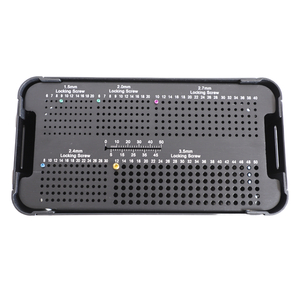
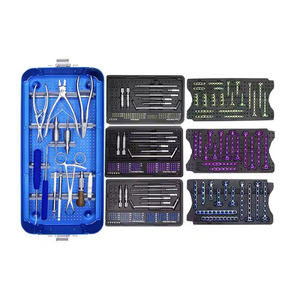
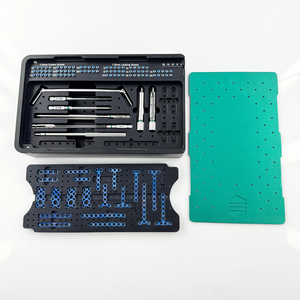
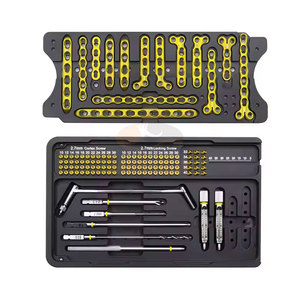
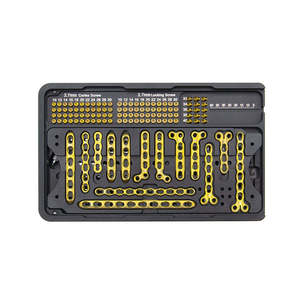
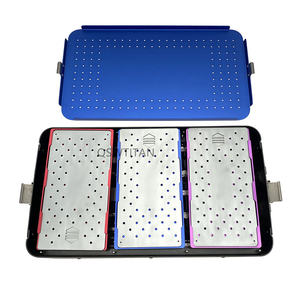
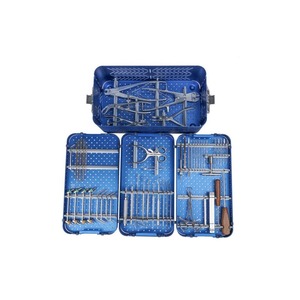
In regional Australia (e.g., Northern Territory Health, Rural NSW Local Health Districts), emergency surgical facilities demand versatile, highly reliable surgical instrumentation kits. Pre-contoured, color-coded elastic nails bundled with intuitive insertion instruments (such as T-handled benders, awls, and bevel-guided benders) allow visiting orthopedic surgeons to execute emergency stabilization without requiring complex power-tool setups.
C. Veterinary Orthopedic Hospitals (Equine & Small Animal Trauma)
Australia’s booming veterinary care sector—driven by advanced companion animal orthopedic clinics and rural equine equine surgical centers—represents a rapidly growing market for micro and mini elastic intramedullary systems. Veterinary surgeons frequently utilize 1.5mm to 3.0mm stainless steel elastic nails for long-bone fracture repair in canine, feline, and avian patients, valuing direct-from-factory cost efficiencies paired with high biological inertness.
5. China-to-Australia Supply Chain Optimization & Wholesale Procurement Trends
The medical device purchasing ecosystem in Australia is undergoing a structural shift. Traditionally dominated by multinational conglomerates with high distribution overheads, hospital purchasing groups and independent distributors are increasingly establishing direct OEM/ODM partnerships with certified Chinese manufacturing facilities.
Supply Chain Efficiency & Cost-Reduction Dynamics
By sourcing direct from leading China wholesale factories, Australian importers achieve up to a 45% to 60% reduction in landed unit costs without sacrificing ISO/TGA quality benchmarks. Key operational advantages include flexible Minimum Order Quantities (MOQs), customized laser-etched branding (LOT/UDI compliance), and rapid air-freight logistics directly into Sydney (SYD), Melbourne (MEL), and Brisbane (BNE) hubs within 5 to 7 business days.