State-of-the-Art Expandable Cages & Surgical Sets
Direct Manufacturer Supply for Costa Rican Hospitals, Surgical Centers, and Medical Distributors
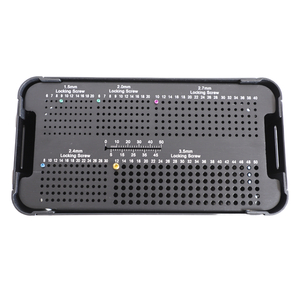 Spine Tech
Expandable Titanium TLIF Interbody Cage System
- Continuous Height Expansion (8mm - 14mm)
- 3D Printed Trabecular Porous Structure
- In-situ Lordosis Angle Adjustment
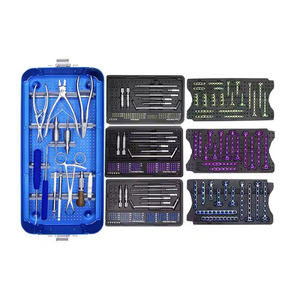 Radiolucent
PEEK-OPTIMA Radiopaque Modular Expandable PLIF Cage
- Modulus Matching Native Cortical Bone
- Dual Tantalum Radiopaque Markers
- Maximized Internal Graft Volume Window
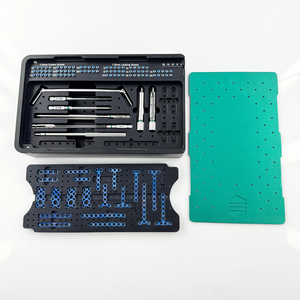 MISS Solution
Lateral Expandable Interbody Fusion System (DLIF/LLIF)
- Self-Locking Internal Drive Mechanism
- Wide Footprint Prevents Endplate Subsidence
- Compatible with Minimally Invasive Access
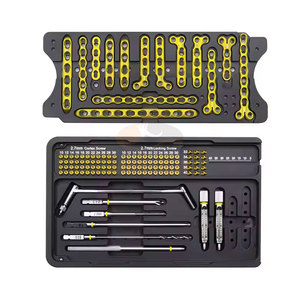 Anterior Spine
3D Printed Porous Titanium Expandable ALIF Device
- Integrated Integrated Fixation Screw Options
- Hyper-Lordotic Expansion (up to 20 Degrees)
- Biomimetic Osseointegration Matrix
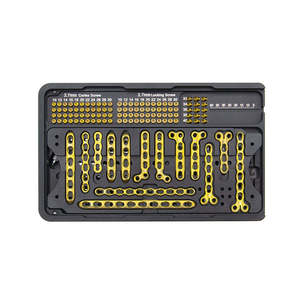 Surgical Set
Orthopedic Instrumentation Kit for Expandable Spine Cages
- Ergonomic Torque-Limiting Insertion Drivers
- Precision Trial Expanders & Calibration Instruments
- Medical-Grade Stainless Steel Construction
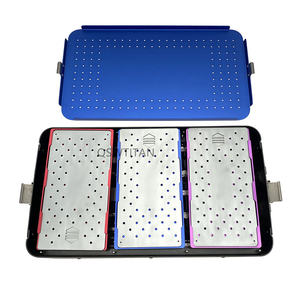 Pedicle System
Polyaxial Pedicle Screw System & Spinal Fixation Rods
- Seamless Compatibility with Expandable Cages
- Low-Profile Friction Head Thread Design
- Ti-6Al-4V ELI Alloy High Fatigue Life
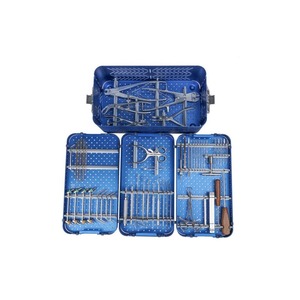 Cervical Spine
Cervical Expandable Interbody Fusion Cage (ACDF)
- Micron-Level Controlled Height Distraction
- Anatomical Superior Endplate Fit
- Anti-Migration Teeth Architecture
Specialty Trauma
Mini Micro Fragment & Specialized Spine Fixation System
- 1.5mm / 2.0mm / 2.7mm Modular Fixation Sets
- Stainless Steel 316L & Titanium Variations
- ISO 13485 / CE Certified Production
Technical Whitepaper: Biomaterial Innovations and Clinical Mechanics of Expandable Spinal Cages
The global evolution of spinal arthrodesis has seen a radical paradigm shift from static interbody spacers toward dynamic, expandable spinal interbody cages. In traditional Transforaminal Lumbar Interbody Fusion (TLIF) and Posterior Lumbar Interbody Fusion (PLIF) protocols, static cages often demand substantial endplate resection, aggressive neural retraction, and present inherent risks of intraoperative endplate damage or postoperative subsidence. For healthcare institutions in Costa Rica—spanning high-capacity public networks like the Caja Costarricense de Seguro Social (CCSS) to world-class private facilities in San José such as Hospital CIMA and Hospital Clínica Bíblica—the deployment of expandable cage technology presents a transformative surgical advantage.
As a global pioneer in orthopedic implant manufacturing, our factory leverages state-of-the-art 5-axis CNC machining, titanium additive manufacturing (3D printing), and medical-grade PEEK (Polyetheretherketone) processing to engineer expandable implants that solve the primary mechanical challenges of spinal fusion: optimal disc height restoration, preservation of neural foraminal volume, and reliable sagittal alignment reconstruction.
Core Clinical Advantage: In-situ expansion allows insertion of a collapsed implant through a smaller anatomical footprint (minimizing dural and nerve root retraction), followed by controlled mechanical expansion to custom-fit the patient's collapsed disc space, restoring natural lordosis while reducing endplate subsidence rates by up to 64% compared to static implants.
Biomechanics: Mechanical Distraction vs. Endplate Preservation
The fundamental physical objective of expandable cages is to achieve optimal distraction without over-stressing the subchondral bone of the vertebral endplates. Static cages are frequently trialed and impacted with force into a tight disc space, generating high shear stresses that compromise the micro-architecture of the endplates. Conversely, an expandable interbody cage is inserted at a low profile (typically 7mm to 8mm), positioned accurately within the anterior or mid-third of the disc space, and expanded vertically or multi-axially using a continuous internal gear mechanism.
This controlled vertical expansion provides gradual, tactile feedback to the spine surgeon. By matching the mechanical resistance of the surrounding ligamentous structures (annulus fibrosus and posterior longitudinal ligament), the device restores tension without inducing micro-fractures in the cortical endplate layer.
| Performance Metric | Static PEEK/Titanium Cages | Factory-Direct Expandable Cages | Clinical Impact for Surgeons |
|---|---|---|---|
| Insertion Profile | Fixed High Profile (10mm - 14mm) | Compact Profile (7mm - 8mm) | Minimizes nerve root retraction & tissue trauma |
| Endplate Contact Area | Line-contact during impaction | Planar parallel fit post-expansion | Drastically decreases risk of cage subsidence |
| Lordotic Alignment | Pre-fixed Angle (0° to 8°) | In-Situ Dynamic Adjustment (0° to 15°+) | Enables customized sagittal balance restoration |
| Graft Window Integrity | Displaced during impaction | Protected internal chamber for post-pack autograft | Maximizes bone graft contact with endplates |
| Intraoperative Flexibility | Requires extensive trial inventory | Modular drive reduces kit complexity | Optimizes OR setup and sterilizer throughput |
Material Science: PEEK-OPTIMA vs. 3D-Printed Trabecular Titanium Alloys
Material selection defines the long-term osseointegration and biomechanical stability of an expandable cage. Our enterprise manufactures dual-material options engineered specifically to clinical preferences across Central American hospitals:
1. Biomimetic 3D-Printed Titanium (Ti-6Al-4V ELI): Fabricated via Laser Powder Bed Fusion (LPBF), these cages feature a porous outer matrix mimicking natural human cancellous bone. With a porosity of 60-70% and pore sizes ranging from 400 to 600 microns, this structure promotes rapid vascularization and cellular osteoblast migration. The macro-roughness provides high initial coefficient of friction, rendering anti-migration teeth even more effective against retropulsion.
2. Radiolucent PEEK-OPTIMA with Integrated Titanium Components: PEEK features a modulus of elasticity (3.6 GPa) closely matching human cortical bone, reducing stress shielding at the fusion interface. To overcome radiolucency challenges during fluoroscopic positioning, our design incorporates precision-fitted Tantalum markers along the anterior and posterior expansion vectors, ensuring exact visualization under X-ray in real-time.
Localization Application Scenarios in the Costa Rica Market
Costa Rica’s healthcare ecosystem presents unique operational requirements for medical device procurement and surgical deployment. Understanding these local nuances enables our factory and export network to deliver tailored supply-chain and product-specification solutions.
Private Medical Tourism Hubs
San José is a premier Latin American destination for spine and orthopedic tourism. Private centers demand premium expandable cages with fast clinical recovery pathways, enabling international patients to undergo minimally invasive procedures with short hospital stays.
Public Health System (CCSS) Tenders
The Caja Costarricense de Seguro Social requires cost-effective, high-durability implant systems backed by extensive regulatory documentation (ISO 13485, CE, CDSCO). Our direct-factory model delivers tender-compliant pricing without sacrificing manufacturing excellence.
High-Altitude & Regional Clinics
Regional hospitals in provinces like Alajuela, Heredia, and Guanacaste require standardized, intuitive surgical instrumentation kits that reduce sterilizer cycle demands and eliminate complex multi-tray configurations during trauma and degenerative procedures.
Clinical Applications & Epidemiological Demographics
In Costa Rica, active demographics—ranging from agricultural workers handling heavy labor in rural sectors to an aging urban population experiencing Degenerative Disc Disease (DDD)—drive high surgical volumes for spinal fusion. Key clinical indications for our expandable cage series include:
- Symptomatic Degenerative Disc Disease (DDD): Restoring anterior column height at L4-L5 and L5-S1 levels where severe disc space collapse has occurred.
- Low-Grade Spondylolisthesis (Grade 1 & 2): Providing powerful anterior distraction to un-trap compressed nerve roots while facilitating reduction via pedicle screw systems.
- Revision Spine Surgeries: Re-establishing proper lordotic tilt and interbody spacing in patients where prior static implants suffered subsidence or pseudoarthrosis.
Localized Development Trends in Central American Medical Devices
The Costa Rican medical technology sector is undergoing rapid modernization driven by three main factors:
1. Accelerated Adoption of Minimally Invasive Spine Surgery (MISS): Surgeons across Central America are transitioning away from open thoracotomy or extensive posterior exposures toward tubular retractor systems and endoscopic fusion. Expandable cages are essential to MISS because they pass through narrow work channels (down to 10mm outer diameter) before expanding inside the disc space.
2. Direct-Factory B2B Procurement: Healthcare providers are increasingly bypassing multi-tier local sub-distributors to contract directly with certified OEM factories and major exporters. This shift eliminates 30-50% markups, allowing hospitals to access tier-1 surgical implants at competitive prices while securing dedicated batch tracing and OEM warranty support.
3. Regulatory Harmonization via Ministerio de Salud: Costa Rica’s Ministerio de Salud maintains rigorous standards for medical device importation under the *Reglamento de Inscripción y Control de Equipos y Dispositivos Médicos*. Products backed by ISO 13485 certification, FDA registration, and CE conformity enjoy streamlined registration pathways, shortening time-to-market for local distributors.
Why Partner With Our Manufacturing Facility
Integrated Quality Management, ISO-Certified Cleanrooms, and Proven Global Export Operations
Our facility holds CDSCO approvals and ISO 13485 certifications across trauma, spine, CMF, and joint reconstruction systems, establishing one of the most comprehensive manufacturing portfolios globally.
Every expandable spine cage undergoes ultrasonic cleaning, 100% optical dimensional verification, and primary sterile packaging within certified Class 7 cleanrooms to guarantee patient safety.
We maintain streamlined export channels serving healthcare providers in over 30 countries across Latin America, Europe, Africa, and Asia, managing cold-chain, customs documentation, and door-to-door delivery.
Utilizing high-precision Swiss CNC lathes and 5-axis machining centers, we fabricate implants strictly from certified 316L Stainless Steel, Ti-6Al-4V ELI Titanium, and PEEK-OPTIMA biomaterials.
Frequently Asked Questions for Costa Rica Importers
All expandable spinal cages exported to Costa Rica are supplied with full regulatory compliance dossiers required by the Ministerio de Salud de Costa Rica. This includes ISO 13485:2016 Quality Management System certification, Certificate of Free Sale (CFS), CDSCO product approval licenses, raw material mill test reports (ASTM F136 / ISO 5832-3 for Titanium, ASTM F2026 for PEEK), and Certificate of Analysis (CoA) for sterile packaging lots.
Every single expandable cage mechanism undergoes static axial compression, dynamic fatigue testing (up to 5 million cycles according to ASTM F2077 standards), and subsidence evaluation (ASTM F2267). Our internal drive threads feature continuous mechanical locking architecture that prevents back-out under cyclic physiological spinal loading.
Standard OEM catalog orders are processed and dispatched within 10 to 15 business days. Express air freight to Juan Santamaría International Airport (SJO) via DHL, FedEx, or specialized medical logistics carriers typically arrives within 4 to 7 operational days. Customs clearance support is provided through our dedicated export documentation team.
Yes. We offer turnkey OEM/ODM manufacturing services for Costa Rican orthopedic distributors and hospital brands. Services include custom laser marking on implant bodies, localized Spanish/English sterile pouch labeling, custom outer box design, and tailored surgical instrument tray layouts matching your specific brand identity.
We provide comprehensive demo instrumentation sets, biomechanical sawbone models, and surgical technique guides (STGs) to support surgeon workshops and distributor sales teams across San José, Cartago, Puntarenas, and surrounding regions. Live video technical assistance with our engineering team is also available.
Partner with a Global Leader in Expandable Spine Technology
Contact our international sales and engineering team today to request complete product catalogs, factory-direct wholesale pricing, and technical regulatory dossiers for the Costa Rica market.