Featured Femoral & Trauma Nailing Systems
Engineered to international standards (ISO 13485 & CDSCO approved), optimized for trauma surgery requirements across Nigeria.
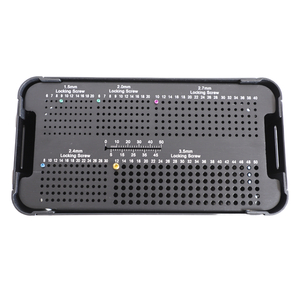
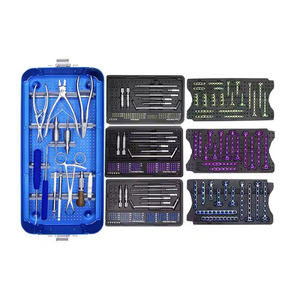
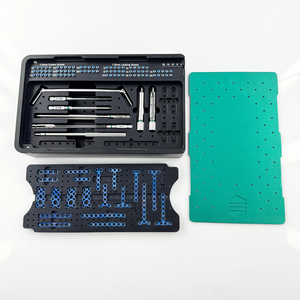
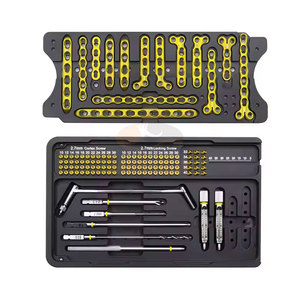
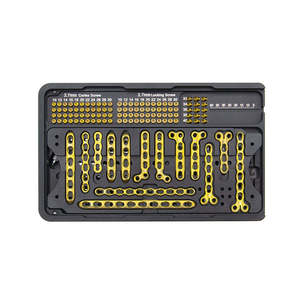
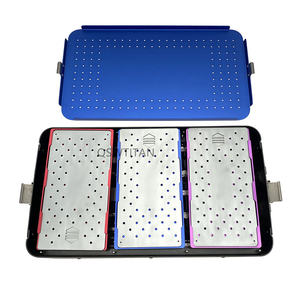
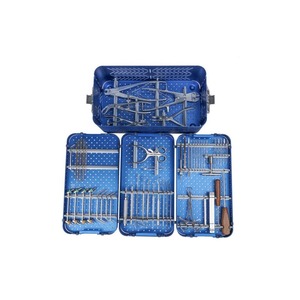
1. Trauma Burden & Clinical Need for Femoral Interlocking Nails in Nigeria
Nigeria, as Africa's most populous nation and largest economic hub, faces a critical healthcare imperative: managing high volumes of severe musculoskeletal trauma. Rapid urbanization, combined with intense commercial transit along heavy traffic corridors—such as the Lagos-Ibadan Expressway, Abuja-Lokoja Highway, and the Sagamu-Benin artery—has led to a elevated incidence of high-energy Road Traffic Accidents (RTAs). Diaphyseal, subtrochanteric, and distal femoral fractures constitute a significant proportion of emergency orthopedic admissions in Nigerian tertiary facilities, including University College Hospital (UCH) Ibadan, Lagos University Teaching Hospital (LUTH), and Aminu Kano Teaching Hospital (AKTH).
Historically, conservative treatment modalities like prolonged skeletal traction or open reduction with non-locking plates presented severe clinical drawbacks in West African clinical settings. These traditional approaches frequently resulted in extended hospital stays, high rates of mal-union, infection, implant failure, and immense economic burdens on affected families. Closed Intramedullary Nailing (CIMN) using Femoral Interlocking Nailing Systems has emerged as the gold standard across global and Nigerian trauma surgery practice.
By providing load-sharing bio-mechanical stability, preserving the periosteal blood supply, and permitting early weight-bearing, modern interlocking nails radically reduce length of stay and post-operative complications. Consequently, orthopedic procurement officers, federal medical centers, state hospitals, and private surgical facilities across Nigeria actively seek high-precision, international-grade, and cost-effective Femoral Interlocking Nailing Systems from certified global manufacturers and exporters.
Biological Healing Preservation
Interlocking intramedullary nails respect the biological fracture environment. By inserting through mini-incisions without stripping the periosteum, hematoma formation is preserved, fostering accelerated osteogenesis and lowering non-union rates below 2%.
Rotational & Axial Load Stability
Distal and proximal locking screws transform the nail into a structural dynamic construct. This dual-plane locking mechanism effectively eliminates torsional displacement and axial collapse in multi-fragmentary or comminuted femoral fractures.
Reduced Hospitalization Costs
In Nigerian healthcare settings where out-of-pocket medical expenses predominate, early patient mobilization reduces bed occupancy times from months (with traction) down to 3–5 post-operative days, minimizing total treatment expenses.
2. Biomechanical Architecture & Metallurgy of Modern Femoral Nails
The human femur experiences tremendous mechanical forces during movement—subject to combined axial compression, bending moments, and torsional shear. Engineering an intramedullary nail for native African anatomical variations requires exact curvature calculations and strict metallurgical integrity.
Metallurgical Grade Selection: Titanium Ti-6Al-4V ELI vs. Stainless Steel 316L
As a premiere manufacturer and exporter, our engineering facilities utilize certified medical-grade raw materials conforming strictly to ISO 5832-3 (Titanium Grade 5 / Ti-6Al-4V ELI) and ISO 5832-1 (316L Implant Grade Stainless Steel):
- Titanium Ti-6Al-4V ELI: Offers an elastic modulus (110 GPa) closer to native cortical bone (18-20 GPa) compared to steel, significantly reducing stress shielding. It exhibits superior fatigue strength, exceptional biocompatibility, and full MRI compatibility, making it the top choice for modern private surgical hospitals in Lagos and Abuja.
- 316L Stainless Steel: Provides outstanding tensile strength and rigidity at an economically accessible price point. Stainless steel systems remain highly popular across state-level general hospitals and teaching institutions across Nigeria due to their cost-effectiveness and high yield strength.
Anatomic Radius of Curvature (ROC) & Cannulation Design
Native human femoral bones feature an anterior bow. Standard straight nails cause anterior cortical impingement or distal fracture mismatch. Our Femoral Interlocking Nailing Systems feature an anatomically optimized Radius of Curvature (ROC) ranging between 1.5m and 2.0m, accommodating diverse patient anthropometrics without wall friction. Furthermore, both Cannulated (for guide-wire targeted insertion in reamed procedures) and Solid nail variations are provided to accommodate surgeon preferences under varying intra-operative image intensifier (C-arm) availabilities.
Technical Specifications Matrix: Femoral Interlocking Nailing System
| Specification Feature | Titanium Alloy Variant (Ti-6Al-4V ELI) | Stainless Steel Variant (316L Grade) |
|---|---|---|
| Nail Diameter Range | 9.0 mm, 10.0 mm, 11.0 mm, 12.0 mm, 13.0 mm | 9.0 mm, 10.0 mm, 11.0 mm, 12.0 mm, 13.0 mm |
| Nail Length Range | 320 mm to 440 mm (20 mm increments) | 320 mm to 440 mm (20 mm increments) |
| Proximal Locking Options | Reconstruction mode (125°/130°) & Standard transverse mode | Standard transverse mode & Dynamic compression slot |
| Distal Locking Options | 2 Transverse locking holes + 1 Dynamic slot | 2 Transverse locking holes + 1 Dynamic slot |
| Locking Screw Diameters | 4.5 mm / 4.9 mm Titanium Locking Screws | 4.5 mm / 4.9 mm Stainless Steel Screws |
| Regulatory Certifications | ISO 13485, CDSCO, CE Compliant Technical File | ISO 13485, CDSCO Approved |
| Anatomical Entry Points | Greater Trochanteric & Piriformis Fossa variants | Piriformis Fossa & Trochanteric Entry variants |
3. Localized Surgical Application Scenarios in Nigeria
Medical infrastructure varies considerably across the 36 states of Nigeria. Designing trauma implants for successful clinical adoption requires adapting to local hospital operational environments:
A. Radiologic Availability & Free-Hand Distal Targeting: While top-tier teaching institutions and private centers utilize real-time fluoroscopy (C-arm guidance), smaller secondary hospitals in remote zones frequently operate with intermittent radiologic access. Our Femoral Interlocking Nailing Instrument Sets include high-rigidity carbon-fiber or stainless-steel radiolucent proximal aiming arms, combined with tactile distal free-hand drilling jigs and targeting accessories to assist surgical teams during locking screw deployment.
B. Reamed vs. Unreamed Intramedullary Technique: High-energy open fractures often require unreamed solid nail insertion to prevent microvascular endosteal thrombosis and reduce embolism risk. Conversely, closed transverse fractures benefit from progressive flexible intramedullary reaming, allowing larger diameter nails (11mm–13mm) to be placed for maximal mechanical stability. Our export kits supply flexible reamers, quick-coupling drives, and anatomical guide wires compatible with standard surgical motors found across West African operating theaters.
4. Healthcare Economics, NAFDAC Regulatory Compliance & Nigeria Logistics
Importing orthopedic implants into Nigeria involves navigating specific regulatory, logistical, and financial requirements. As a seasoned manufacturer and international exporter, we ensure full operational alignment to support seamless import workflows for local pharmaceutical companies, medical device distributors, and hospital procurement teams.
NAFDAC & Standards Organisation of Nigeria (SON) Compliance
Medical devices entering Nigeria must comply with regulations issued by the National Agency for Food and Drug Administration and Control (NAFDAC) and the Standards Organisation of Nigeria Conformity Assessment Program (SONCAP). Uteshiya Medicare provides complete technical documentation dossiers to local Nigerian partners, including:
- Free Sale Certificates (FSC) issued by Indian Licensing Authorities (CDSCO).
- Certificate of Pharmaceutical Product (COPP) / Medical Device Manufacturing Licenses.
- ISO 13485:2016 Quality Management System Certificates.
- Material Traceability & Batch Mill Test Certificates for raw titanium and stainless steel.
- Sterilization Validation Reports (Gamma Irradiation or EO Sterilization).
Port Clearance & Supply Chain Efficiency (Air Freight & Freight Shipping)
Understanding the critical nature of orthopedic trauma inventory management, we maintain established logistics corridors to West Africa. Orders destined for Lagos (Murtala Muhammed International Airport - LOS, or Apapa/Tin Can Island Ports), Port Harcourt, or Kano are dispatched via tier-1 international courier and cargo partners (DHL Express, Emirates SkyCargo, Maersk). Custom protective packaging guarantees that implants remain damage-free and sterile throughout transit and storage in humid tropical environments.
Why Leading Nigerian Importers Partner with Uteshiya Medicare
Uteshiya Medicare is an FDA-registered, CDSCO-approved, and ISO 13485:2016 certified manufacturer and global exporter of high-precision orthopedic implants. With over 1,000 certified products spanning trauma, spine, CMF, joint reconstruction, and external fixation systems, we supply surgeon-trusted hardware to healthcare professionals in more than 30 countries.
Our state-of-the-art CNC Swiss-turning machining centers, multi-axis milling facilities, and in-house sterile packaging facilities ensure every Femoral Interlocking Nail meets stringent global standards. We offer custom OEM production, turnkey distributor starter kits, and full technical training support for medical distributors throughout Nigeria.
Frequently Asked Questions (FAQ) for Nigerian Buyers
Clear answers regarding B2B purchasing, regulatory support, shipping timelines, and surgical instrumentation.
Elevate Orthopedic Trauma Care in Nigeria
Partner with an established manufacturer and exporter of Femoral Interlocking Nailing Systems. Request comprehensive product catalogs, technical documentation, or wholesale pricing today.