Featured Orthopedic Locking Compression Systems
High-precision trauma fixation plates engineered for upper/lower extremity structural integrity
Technical Whitepaper: Olecranon Locking Compression Plate Engineering & Surgical Biomechanics
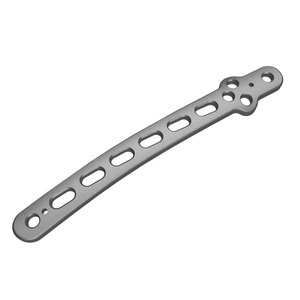
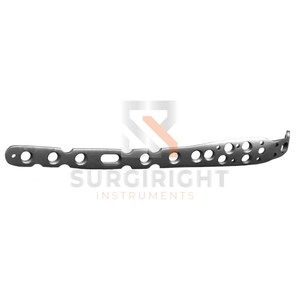
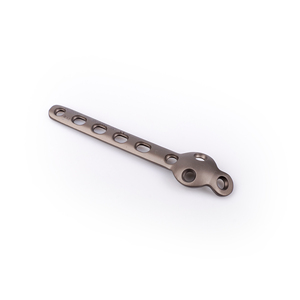
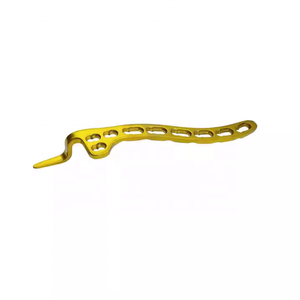
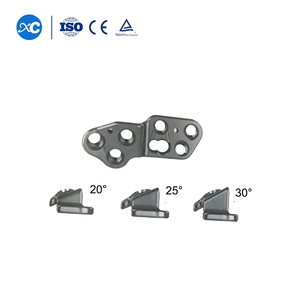
Proximal ulna fractures—specifically complex intra-articular fractures of the olecranon involving Mayo Type II and Type III comminutions—present significant clinical challenges in orthopedic trauma surgery. The anatomical restoration of the trochlear notch requires rigid internal fixation capable of counteracting the substantial tensile forces exerted by the triceps brachii tendon complex during early active elbow flexion. The Olecranon Locking Compression Plate (LCP) represents a paradigm shift from traditional K-wire tension band wiring, offering superior angular stability, reduced hardware prominence, and enhanced fatigue resistance under cyclic torsional loading.
As a specialized medical implant factory and global exporter catering directly to hospitals, medical centers, and surgical distributors across the Osaka metropolitan area and broader Kansai region, our manufacturing process prioritizes precise anatomical contouring, advanced surface passivation, and strict compliance with global regulatory standards.
Anatomical Profile Matching
Pre-contoured plate geometry tailored to the dorsal proximal ulna anatomy, minimizing the need for intraoperative bending and reducing soft-tissue impingement over the subcutaneous olecranon border.
Combi-Hole Versatility
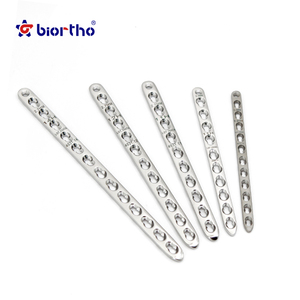
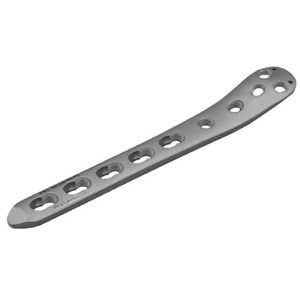
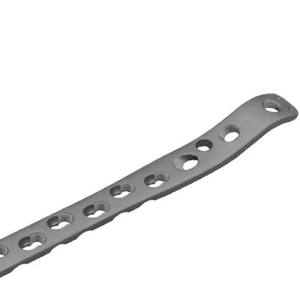
Combines dynamic compression unit (DCU) slots with threaded locking screw holes, allowing surgeons to execute axial compression alongside fixed-angle locking stability in a single construct.
Metallurgical Integrity
Forged from high-purity Ti-6Al-4V ELI (Grade 5 Titanium Alloy) or 316L Implant Grade Stainless Steel, ensuring optimal bio-compatibility, modulus of elasticity, and zero intergranular corrosion.
Metallurgical & Mechanical Performance Matrix
| Biomechanical Property | Ti-6Al-4V ELI (Titanium Alloy) | 316L Stainless Steel | Clinical Advantage in Olecranon Fixation |
|---|---|---|---|
| Ultimate Tensile Strength (MPa) | 860 - 930 MPa | 620 - 690 MPa | Prevents structural deformation under extreme tension-band loads. |
| Yield Strength (0.2% Offset) | 790 MPa | 310 MPa | High resistance to permanent bending during rigid fixation of comminuted fragments. |
| Elastic Modulus (GPa) | 110 GPa | 200 GPa | Titanium closer to human cortical bone (18-22 GPa), reducing stress shielding. |
| Fatigue Limit (107 Cycles) | 510 MPa | 260 MPa | Ensures plate longevity during early post-operative physical rehabilitation. |
| Biocompatibility Standard | ISO 5832-3 / ASTM F136 | ISO 5832-1 / ASTM F138 | Exceeds regulatory criteria for long-term internal trauma fixation implants. |
Localized Application Scenarios in Osaka's Clinical Landscape
The healthcare delivery system in Osaka—anchored by world-class institutions such as Osaka University Hospital, Kindai University Hospital, and major emergency trauma centers across Umeda, Namba, and Minoh—operates under stringent clinical efficacy and patient safety protocols. As Osaka's demographic demographics skew toward an active aging population alongside urban industrial trauma cases, surgical demands require tailored fixation methodologies.
Geriatric Osteoporotic Fracture Management
Scenario: Low-energy falls resulting in comminuted osteoporotic proximal ulna fractures in patients aged 65+ across Kansai regional clinics.
Clinical Solution: The multi-planar locking screw arrangement in our olecranon plates provides fixed-angle stability that does not rely on bone quality for screw thread purchase. This prevents screw pull-out in osteopenic bone, facilitating immediate post-op mobilization and mitigating elbow joint stiffness.
High-Energy Urban & Sports Trauma
Scenario: High-impact sporting injuries and motor traffic accidents presenting complex olecranon fracture-dislocations (Monteggia lesions).
Clinical Solution: Utilizing anatomical low-profile 3.5mm olecranon LCP constructs with proximal home-run screws targeting the coronoid process. This restores radiohumeral alignment and trochlear stability without requiring extensive soft tissue stripping.
Kansai & Osaka Medical Device Procurement Trends (2025–2030)
Navigating the Japanese medical device ecosystem requires a profound understanding of regulatory pathways, cost-containment pressures under the National Health Insurance (NHI) reimbursement system, and changing hospital procurement strategies.
Shift to Low-Profile Anatomic Plates
Hospitals in Osaka are rapidly phasing out bulky traditional reconstruction plates in favor of ultra-low-profile pre-contoured plates to eliminate secondary implant removal surgeries caused by soft-tissue irritation.
OEM/ODM Factory Direct Partnerships
Japanese medical device distributors are increasingly seeking certified foreign manufacturers capable of providing high-precision OEM manufacturing under ISO 13485 standards to streamline inventory supply chains and optimize margin structures.
Demand for Complete Surgical Kits
Surgeons demand ergonomic, color-coded manual instrument sets packaged alongside sterilized implant modules to reduce operating theater prep time and lower hospital sterilization overheads.
Why Osaka Medical Distributors Trust Our Manufacturing Excellence
As a global orthopedic manufacturing powerhouse with over a decade of clinical specialization, our state-of-the-art facility integrates advanced Swiss CNC machining centers, automated passivation lines, and rigorous cleanroom sterile packaging.
1,000+ CDSCO & ISO Certified Portfolio
Extensive catalog covering trauma plates, interlocking nails, spine pedicle screw systems, CMF plates, and external fixators trusted across 30+ countries.
In-House Sterile Cleanroom Packaging
CDSCO-approved Class 10,000 cleanroom packaging facility guarantees zero bacterial endotoxin loads, providing ready-to-use sterile implants to hospitals.
Patient-Specific Custom Implant Engineering
Advanced 3D reconstruction from patient DICOM CT data allows rapid prototyping and custom implant fabrication for severe bone loss or deformities.
Rigorous Quality Control & Traceability
Every olecranon plate undergoes 100% optical dimensional inspection, fatigue testing, and complete raw material heat-lot traceability.
Frequently Asked Questions for Osaka Procurement & Surgical Teams
What metal options are available for the Olecranon Locking Compression Plate?
We supply olecranon LCP systems in both Grade 5 Titanium Alloy (Ti-6Al-4V ELI according to ASTM F136 / ISO 5832-3) and 316L Stainless Steel (ASTM F138 / ISO 5832-1). Titanium is recommended for reduced artifact distortion under MRI scanning and superior bio-integration, while 316L SS provides exceptional stiffness at a cost-effective price point.
How do your manufacturing standards support Japanese PMDA compliance for importers in Osaka?
Our manufacturing facility operates strictly under ISO 13485:2016 Quality Management System standards. We provide full technical dossiers (STED), biocompatibility test reports (ISO 10993), packaging validation, sterilization validation (ISO 11137), and heat-treatment certificates necessary for Japanese MAH (Marketing Authorization Holder) partners to submit for PMDA approval.
What is the typical shipping lead time to the Port of Osaka or Kansai International Airport (KIX)?
For standard catalog items (Locking Compression Plates, Cortex Screws), orders are dispatched within 7–14 days. Express air freight to Kansai International Airport (KIX) takes 3–5 business days, ensuring seamless inventory replenishment for Osaka medical suppliers.
Can you supply custom-branded OEM packaging and color-coded surgical tray instrumentation?
Yes. We offer complete OEM/ODM solutions, including custom laser-marking of hospital or distributor logos, customized anodization colors for plate/screw size identification, and tailor-made stainless steel sterilization trays featuring graphic overlays in Japanese or English.
Do your olecranon plates support variable-angle locking screw placement?
Our multi-axial titanium locking plate series allows up to ±15° screw angle trajectory variation within the combination locking hole, enabling surgeons to target specific bone fragments and avoid intra-articular screw penetration during complex olecranon reconstruction.
Partner with a Premier Olecranon Plate Manufacturer
Empower your surgical network in Osaka with world-class, bio-engineered orthopedic trauma implants. Request our comprehensive technical product catalog, material test reports, and direct factory pricing today.