Featured Orthopedic Fixation Systems & Instruments
Explore our CDSCO-approved, high-precision surgical fixation systems and trauma sets manufactured in India for global clinical requirements.
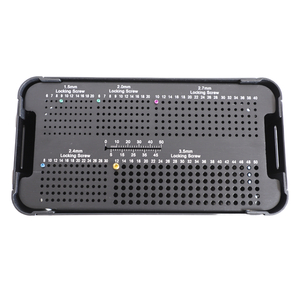
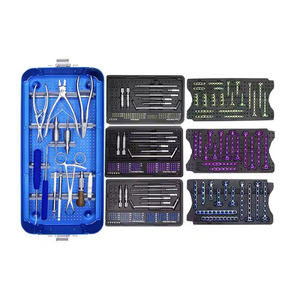
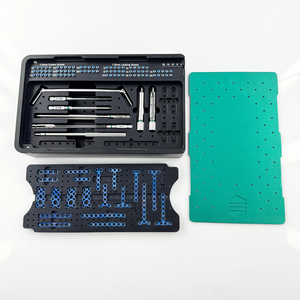
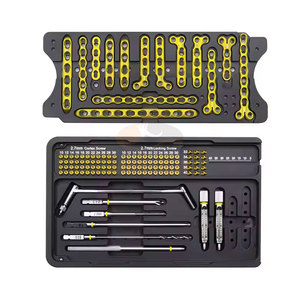
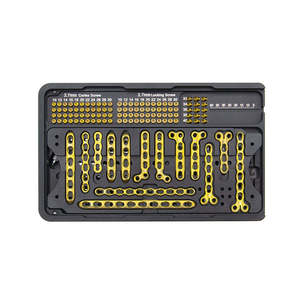
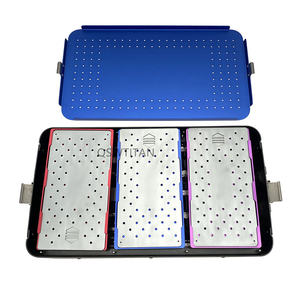
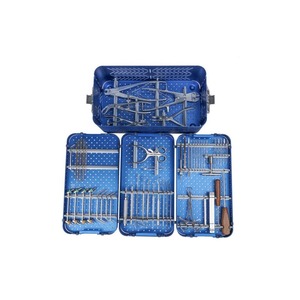
1. Executive Summary & The Indian Medical Device Manufacturing Landscape
The global spinal implant industry has experienced a paradigm shift over the past decade, driven by an accelerating demand for high-precision, cost-effective posterior cervical stabilization systems. Within this landscape, India has established itself as an authoritative hub for medical device manufacturing, combining advanced metallurgical engineering, strict regulatory compliance under the Central Drugs Standard Control Organization (CDSCO), and high-volume export capabilities.
Posterior Cervical Fixation Systems represent a critical segment of spine trauma and reconstructive surgery. These systems—comprising polyaxial pedicle screws, lateral mass screws, occipitocervical plates, cross-connectors, and titanium rods—are designed to stabilize the C1 to C7 cervical spine segments during posterior instrumentation for conditions such as degenerative disc disease, cervical spondylotic myelopathy, traumatic subluxation, instable fractures, and post-laminectomy kyphosis.
As leading manufacturers based in Gujarat, India's premier medical device industrial corridor (specifically manufacturing hubs like Mahemdavad, Kheda), companies such as Uteshiya Medicare lead the market in delivering high-grade implants crafted from implant-grade Titanium (Ti-6Al-4V ELI conforming to ASTM F136) and 316L Stainless Steel (conforming to ASTM F138). This technical whitepaper evaluates the biomechanical mechanisms, clinical efficacy, localized Indian market trends, regulatory export frameworks, and B2B procurement standards that define India's leadership in posterior cervical fixation manufacturing.
Metallurgical Excellence
Precision-milled Ti-6Al-4V ELI titanium alloy ensuring exceptional fatigue strength, bio-inertness, and minimal MRI artifact interference.
CDSCO & ISO Compliance
Manufactured under stringent Medical Device Rules (MDR) with ISO 13485:2016 certification and CDSCO MD-9/MD-11 commercial licensing.
Cost-To-Quality Ratio
Uncompromising biomechanical safety metrics matching Western OEMs at a competitive manufacturing cost structure for global markets.
2. Technical Architecture & Biomechanical Mechanics of Posterior Cervical Systems
The posterior cervical spine presents complex anatomical constraints due to the proximity of the vertebral artery, cervical spinal cord, and nerve roots. Consequently, posterior cervical fixation implants demand rigorous geometrical precision and mechanical reliability. Indian manufacturing facilities utilize multi-axis Swiss CNC machining centers and coordinate measuring machines (CMM) to achieve micro-inch tolerances across all system components.
2.1 System Components & Engineering Specifications
A comprehensive Posterior Cervical Fixation System consists of modular elements optimized for occipito-cervico-thoracic fixation:
- Polyaxial Pedicle & Lateral Mass Screws: Engineered with a top-loading friction-head mechanism allowing a conical angulation range of up to ±45 degrees. Available in diameters ranging from 3.5mm to 4.0mm and lengths from 10mm to 30mm, featuring dual-lead buttress thread profiles to maximize cortical pullout strength.
- C1-C2 Specific Fixation Screws: Fully threaded and smooth-shank screws designed for C1 transarticular and C2 pedicle/pars interarticularis placement, optimized for anterior/posterior rotational rigidity.
- Occipital Plates & Buttons: Anatomically pre-contoured low-profile plates crafted from high-strength titanium, featuring central and lateral screw slots to accommodate patient-specific occipital bone thickness.
- Titanium & Stainless Steel Rods: 3.5mm outer diameter pre-bent and straight rods providing rigid longitudinal support.
- Transverse Cross-Connectors: Adjustable and fixed cross-link devices that significantly enhance rotational stability and torsional stiffness of the bilateral construct under physiological loading.
| Component Parameter | Technical Specification | Biomechanical Objective |
|---|---|---|
| Material Composition | Ti-6Al-4V ELI (ASTM F136) / 316L SS | Biocompatibility, High Strength-to-Weight Ratio, MRI Compatibility |
| Screw Diameter Options | 3.5mm, 4.0mm (Emergency/Revision) | Anatomical adaptation to lateral mass & pedicle bone structures |
| Polyaxial Angular Range | ±45° Conical Range of Motion | Ease of intraoperative rod insertion without excessive bending |
| Rod Outer Diameter | 3.5mm (Straight & Pre-contoured) | Optimal lordotic maintenance and high flexural fatigue life |
| Set Screw Locking Mechanism | Square-thread / Reverse-angle thread | Eliminating cross-threading and preventing set screw splay |
| Static & Dynamic Fatigue Testing | ASTM F1717 / ISO 12189 Standards | Resisting 5 million cycles of axial compression and torsion |
2.2 Biomechanical Performance & Load Distribution
Under ASTM F1717 test protocols, Indian posterior cervical constructs undergo rigorous static pull-out, static compression bending, and dynamic fatigue testing. The friction-fit polyaxial head design minimizes peak stress concentration at the screw-rod interface, distributing shear loads uniformly across the cervical pedicle or lateral mass bone matrix. This significantly reduces the incidence of postoperative screw loosening, construct pullout, or hardware fatigue failure in patients undergoing multi-level cervical fusion.
3. Localization & Clinical Application Scenarios in the Indian Subcontinent
The clinical application of posterior cervical fixation devices in India is shaped by unique epidemiological factors, healthcare infrastructure developments, and demographic diversity across major hospital systems. Indian orthopedic and neurosurgical procedures require implants that combine clinical versatility with durability.
3.1 High-Incidence Clinical Scenarios in Indian Healthcare
- Traumatic Cervical Spine Injuries: High velocity road traffic accidents (RTAs) and industrial injuries account for a substantial percentage of cervical spine fractures and dislocations in India. Posterior stabilization using lateral mass (Magerl/Roy-Camille techniques) and C1-C2 pedicle fixation serves as the primary surgical choice for acute mechanical instability.
- Cervical Spondylotic Myelopathy (CSM): Multi-segmental degenerative compression is widespread among aging populations in both urban and rural India. Posterior cervical laminectomy combined with instrumented fusion effectively prevents post-laminectomy kyphosis while maintaining sagittal alignment.
- Congenital & Cranio-Vertebral Junction (CVJ) Anomalies: India exhibits a relatively high clinical prevalence of CVJ malformations, such as basilar invagination and atlantoaxial dislocation (AAD). Indian spinal surgeons extensively utilize specialized occipitocervical fusion systems manufactured by top Indian exporters to execute complex re-alignment procedures.
3.2 Indian Market Trends & Regulatory Transformation (2025–2030)
The Indian medical device ecosystem has undergone a monumental transformation following the full implementation of the Medical Device Rules (MDR) by the Central Drugs Standard Control Organization (CDSCO). The transition from voluntary registration to mandatory licensing for Class A, B, C, and D devices has institutionalized global manufacturing quality standards across Indian factories.
Key localized market growth drivers include:
- Expansion of Ayushman Bharat (PM-JAY): Government-backed universal healthcare schemes have vastly expanded surgical coverage in Tier-2 and Tier-3 Indian cities, accelerating the institutional procurement of certified orthopedic and spinal implants.
- "Make in India" & Production-Linked Incentives (PLI): Government initiatives supporting domestic manufacturing have fostered investment in state-of-the-art cleanroom packaging, 5-axis CNC machining, and automated polishing facilities in key manufacturing hubs like Gujarat.
- Shift Toward Patient-Specific & Modular Sets: Indian clinical centers are moving rapidly toward standardized modular tray kits that encompass trauma, micro-fragment, and spinal instrumentation in unified, autoclavable systems.
4. Enterprise Advantages: Manufacturing Precision at Uteshiya Medicare
As an established CDSCO-approved and ISO-certified medical device exporter located in Rohisa, Mahemdavad (Gujarat, India), Uteshiya Medicare serves as a global benchmark for quality implant manufacturing. Holding a certified portfolio of over 1,000 approved orthopedic and spinal implants, our facility integrates high-precision engineering with complete batch traceability.
In-House Cleanroom Packaging
Operates ISO Class 7 and Class 8 cleanrooms for sterile and non-sterile implant packaging, ensuring zero biological contamination.
Advanced CNC Manufacturing
Equipped with high-precision Swiss-type automatic lathes and 5-axis milling centers capable of crafting complex polyaxial screw threads.
Traceability & Quality Assurance
100% optical CMM dimensional verification, raw material heat-lot tracking, and complete certificate of analysis (CoA) documentation.
Our posterior cervical fixation systems and modular trauma sets are exported to over 30 countries across Latin America, Southeast Asia, the Middle East, Africa, and Eastern Europe. Healthcare institutions and international distributors rely on our OEM/ODM capabilities, private labeling options, and rapid order fulfillment lead times.
5. Local & International B2B Procurement FAQ
Below are authoritative responses to common technical, clinical, and commercial questions raised by hospital procurement officers, medical device distributors, and orthopedic importers acquiring Indian posterior cervical fixation systems.
Summary & Procurement Next Steps
India's medical device manufacturing sector offers world-class quality, engineering integrity, and CDSCO/ISO regulatory security for posterior cervical stabilization systems. Partner with Uteshiya Medicare to access superior implants engineered to improve patient surgical outcomes globally.