Featured Spine Fusion Cages & Instrumentation Systems
Precision-Engineered PEEK & Titanium Posterior Lumbar Interbody Fusion Solutions
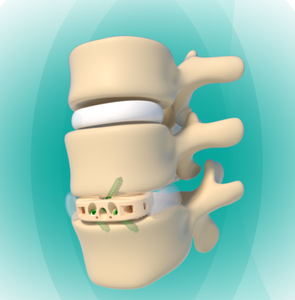
State of Posterior Lumbar Fusion Cage Manufacturing in the United States
The United States spine surgery market represents the world's most demanding procurement ecosystem for Posterior Lumbar Interbody Fusion (PLIF) and Transforaminal Lumbar Interbody Fusion (TLIF) devices. Spinal interbody cages serve as crucial load-bearing constructs designed to maintain disc height, restore sagittal balance, provide immediate mechanical stability, and facilitate osseous integration between adjacent vertebral bodies. As hospital purchasing networks, Group Purchasing Organizations (GPOs), and Integrated Delivery Networks (IDNs) streamline their vendor matrix, original equipment manufacturers (OEMs) and contract factories are under intense pressure to deliver medical devices that strike a balance between rigorous biomechanical performance, biocompatibility, and economic viability.
Understanding the landscape of posterior lumbar fusion cage factories and suppliers in United States requires looking into biomaterial innovation, precision CNC machining capabilities, regulatory compliance frameworks, and localized clinical adoption pathways. Today's spine surgeons demand cages engineered with radiolucent Polyetheretherketone (PEEK-OPTIMA), 3D-printed porous Titanium (Ti-6Al-4V ELI), or hybrid osteoinductive surfaces. Simultaneously, US hospital supply chains require seamless integration with standardized instrument trays, sterile barrier packaging, and complete batch traceability under FDA QMSR (Quality Management System Regulation) and ISO 13485:2016 standards.
Biomaterial Advancement & Engineering Architecture
Key metallurgical and polymer breakthroughs driving US clinical preferences
PEEK-OPTIMA Polymer Cages
Polyetheretherketone (PEEK) remains a gold standard in PLIF constructs due to its elastic modulus (~3.6 GPa) closely matching human cortical and trabecular bone structure. This mitigates stress-shielding effects and reduces post-operative subsidence risk. Integrated radiopaque Tantalum or Titanium alloy markers enable precise intraoperative verification under fluoroscopy without artifact interference on post-op CT or MRI scans.
3D-Printed Porous Titanium (Ti-6Al-4V)
Additive manufacturing via Selective Laser Melting (SLM) or Electron Beam Melting (EBM) allows factories to create interconnected pore matrices with 60%–80% porosity and pore sizes ranging from 400 to 700 microns. This mimics natural cancellous bone, facilitating vascularization and direct cellular osteointegration throughout the body of the implant.
Anatomic & Bulleted Geometry
Precision-machined bulleted nose configurations facilitate smoother insertion into collapsed disc spaces during minimally invasive surgery (MIS PLIF). Self-distracting leading edges minimize intraoperative endplate damage, while pyramid-shaped aggressive anti-migration serrations prevent posterior expulsion under physiological rotational and shear loads.
Biomechanical Testing & Engineering Benchmark Matrix
To achieve regulatory acceptance and surgeon adoption across US trauma centers and ambulatory surgery centers, posterior lumbar interbody fusion devices must comply with rigorous mechanical testing standards established by ASTM International. The table below outlines critical engineering attributes and empirical benchmark requirements:
| Biomechanical Test Protocol | Standard Guideline | Target Engineering Value | Clinical Significance for US Buyers |
|---|---|---|---|
| Static Axial Compression | ASTM F2077 | > 22,000 N (PEEK) / > 35,000 N (Ti) | Prevents structural collapse under maximum physiological axial loading conditions. |
| Dynamic Compression Fatigue | ASTM F2077 | > 5.0 Million Cycles at 4.0 kN | Ensures long-term structural fatigue endurance without particulate shedding or micro-fractures. |
| Static & Dynamic Torsion | ASTM F2077 | > 12.5 Nm Yield Torque | Resists rotational shear forces during axial twisting and lateral bending motions. |
| Subsidence Evaluation | ASTM F2267 | Stiffness Matching Cancellous Bone | Quantifies sinkage into polyurethane foam blocks to prevent vertebral endplate breach. |
| Expulsion / Migration Force | Custom Biomechanical Shear | > 350 N Resistance Force | Evaluates effectiveness of surface serrations in preventing posterior cage displacement. |
| Biocompatibility Profile | ISO 10993 Series | Zero Cytotoxicity / Hemocompatible | Mandatory FDA 510(k) requirement for permanent implantable orthopedic Class III/Class II devices. |
Localized US Application Scenarios & Clinical Integration
The application of posterior lumbar interbody fusion cages across US healthcare facilities varies significantly depending on the clinical environment, procedure complexity, and surgical workflow choices:
1. Outpatient Ambulatory Surgical Centers (ASCs)
Over the past decade, a major shift has occurred toward performing single-level and two-level lumbar fusions in outpatient ASC environments. US spinal surgeons require pre-packaged, single-use sterile lumbar fusion kits containing expandable cages or pre-sized PEEK implants paired with streamlined insertion instrumentation. Minimizing intraoperative steps directly correlates with reduced anesthesia duration and lower operative cost structures.
2. Level-1 Academic Medical Centers & Hospital Networks
Academic hospitals handling complex spinal deformities, high-grade spondylolisthesis, and revision fusion procedures prioritize high lordotic option cages (0° to 15° lordosis angles) with expansive graft windows. These institutions rely heavily on large graft volumes—combining autograft with recombinant human Bone Morphogenetic Protein (rhBMP-2) or cellular bone matrices—demanding cages with optimized internal fusion apertures.
3. Minimally Invasive Spine (MIS) Access Procedures
MIS PLIF techniques utilize tubular retractors to preserve paraspinous muscle architecture. Cages tailored for MIS applications feature self-guiding rounded bullet tips, articulated insertion handles, and reduced cross-sectional profiles. This allows safe passage through tight nerve root working channels without compromising final contact area over the decorticated endplate.
Key Trends Reshaping the US Lumbar Cage Market
Procurement executives and clinical department chairs in the United States are managing a rapidly changing market landscape. The following macroeconomic and technological forces are driving procurement strategy among leading factories and distribution partners:
Rise of Expandable Interbody Cages
Expandable PLIF cages allow insertion at a collapsed profile height and subsequent mechanical expansion within the intervertebral disc space. This engineering solution minimizes nerve root retraction during insertion while maximizing post-expansion disc height restoration and lordotic alignment customization.
3D Printing & Patient-Specific Implants
Advancements in DICOM CT image reconstruction permit factories to manufacture patient-matched custom cages for complex revision surgeries. Rapid 3D printing turnarounds enable suppliers to deliver anatomical fit options that eliminate dead spaces between implant surfaces and irregular endplates.
Capitation & OEM Direct Sourcing
To counter declining insurance reimbursement caps under CPT coding schemes, US surgical centers are bypassing legacy price-inflated brands in favor of certified contract manufacturing suppliers. Direct OEM partnerships significantly reduce per-case construct costs without sacrificing ISO/FDA quality mandates.
Manufacturing Excellence & Contract Manufacturing Strengths
As an established leader in orthopedic and spinal implant manufacturing with CDSCO, FDA-registered, and ISO 13485 certified facilities, our production infrastructure delivers world-class medical devices engineered for global clinical compliance. Serving medical device distributors, OEM brands, and surgical groups across 30+ countries, our manufacturing ecosystems stand on rigorous operational foundations:
5-Axis CNC Precision Machining
Utilizing Swiss-type 5-axis CNC machining centers and high-precision laser-cutting tools, we maintain micron-level tolerances (±0.005mm) across PEEK-OPTIMA, 316L Stainless Steel, and Ti-6Al-4V ELI titanium alloys. Every cage edge undergoes automated deburring and microscopic surface verification.
In-House ISO Class 7 Cleanroom & Sterilization
Implants are processed, washed via multi-stage ultrasonic aqueous cleaning, and sealed within ISO Class 7 cleanrooms. We offer both non-sterile bulk packaging and validated gamma/EtO sterile double-pouch blister systems complete with shelf-life integrity documentation.
1,000+ Approved Products & Regulatory Support
Our massive portfolio spans trauma plates, pedicle screw systems, interlocking nails, joint reconstruction, and interbody cages. We provide US distributors with comprehensive Design History Files (DHF), Master Files, biomaterial test reports, and regulatory mapping required for market clearance.
Frequently Asked Questions for US B2B Buyers & Distributors
Key considerations regarding procurement, custom OEM specifications, regulatory compliance, and distribution logistics:
Every shipment of Posterior Lumbar Interbody Fusion Cages includes complete Certificate of Analysis (CoA), material melt certificates (confirming ASTM F2026 PEEK or ASTM F136 Titanium grades), ISO 13485 production lot documentation, non-cytotoxicity reports (ISO 10993-5), and biomechanical static/dynamic test summaries (ASTM F2077). Full Device History Records (DHR) are archived for full lot traceability.
PEEK-OPTIMA is radiolucent, meaning it does not produce scatter artifacts on X-ray, CT, or MRI scans. This enables clear assessment of bone graft bridging inside the cage cavity. Tantalum pin markers integrated at the anterior and posterior boundaries outline cage orientation. Conversely, 3D-printed titanium offers superior immediate bone-implant mechanical interlocking, though radiopaque shadowing requires careful windowing during post-op CT imaging.
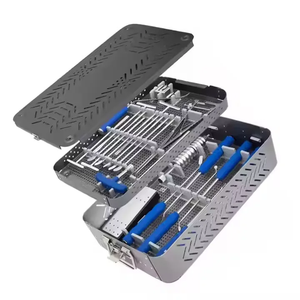
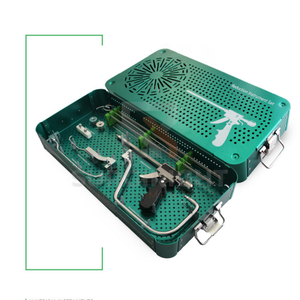
Yes. We provide complete OEM/ODM manufacturing services, including custom CAD modification of lordotic angles (e.g., 0°, 4°, 8°, 12°), customized height gradations (7mm to 17mm), private-label laser marking, custom anodization coloring for titanium trial instruments, and dedicated German-standard aluminum sterilization containers customized to your brand’s logo and layout.
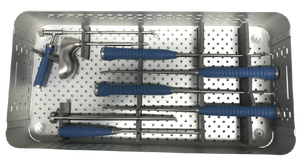
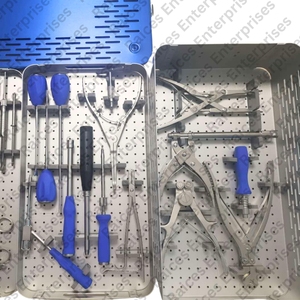
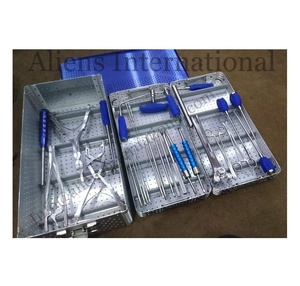
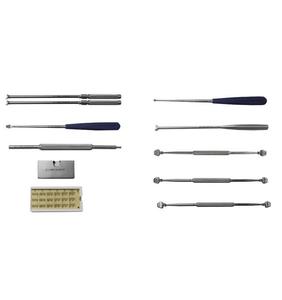
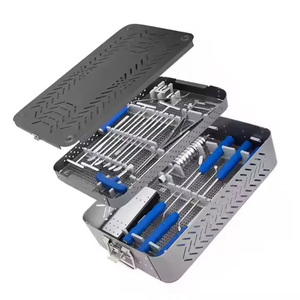
A complete PLIF instrument kit includes trial cages across all height and length iterations, disc space shavers/rasps for cartilage removal, endplate scrapers, osteotomes, bulleted cage inserters, impaction mallets, rotatable cage drivers, and specialized graft packing block funnels. Instruments are forged from surgical-grade stainless steel (AISI 420/630) to endure repeated autoclave sterilization cycles.
For standardized catalog items, stock is available for immediate dispatch with lead times of 7 to 14 business days via international air express. For custom OEM branding or private-label instrument tray assemblies, typical MOQs start at 50 to 100 cage units per size configuration, with typical production lead times ranging between 30 and 45 days.
Request Technical Specifications & Full B2B Product Catalog
Partner with an ISO 13485 certified orthopedic implants manufacturer. Contact our engineering team today to receive detailed CAD drawings, ASTM testing reports, FDA compliance documentation, and wholesale pricing.