Featured Shoulder & Orthopedic Trauma Products
Explore our CDSCO & ISO 13485 certified surgical implant portfolio, crafted for maximum biomechanical stability, reduced recovery times, and superior pull-out strength.
Technical Whitepaper: Advanced Shoulder Arthroscopy & Reconstruction Solutions
A Data-Driven Engineering Breakdown for Hungarian Orthopedic Surgeons, Procurement Directors, and Hospital Supply Chain Managers
Shoulder arthroscopy has undergone a seismic shift toward minimally invasive, biomechanically optimized stabilization and repair procedures. For surgical centers operating across Hungary—from major public university hospitals such as Semmelweis University Department of Orthopedics in Budapest and the University of Debrecen Clinical Center to elite private surgical networks like TritonLife and Medicover Hungary—the requirement for precision arthroscopic implants has never been more critical. Suture anchors, subacromial decompression sets, clavicle fixation plates, and micro-fragment trauma systems must provide unyielding fixation strength, zero tissue toxicity, and seamless intraoperative handling.
As a global OEM manufacturer and supplier of orthopedic devices certified under ISO 13485:2016, ISO 9001:2015, and CDSCO guidelines (with full alignment to EU Medical Device Regulation MDR 2017/745), Uteshiya Medicare (Kaisen Medical Care) provides Hungarian healthcare providers with direct access to medical-grade Titanium Alloy (Ti-6Al-4V ELI) and 316L Stainless Steel shoulder systems. Our continuous research in bio-material mechanics guarantees reduced pull-out failure, minimal inflammatory tissue responses, and streamlined instrumentation that reduces operating room time.
“Information Gain Advantage: Modern shoulder arthroscopy requires suture anchors and fragment plates engineered with cortical thread pitch optimization, providing superior initial primary stability in low-density osteopenic bone while maintaining full biocompatibility under rigorous European testing standards.”
1. Biomechanical Metallurgy: Titanium Ti-6Al-4V ELI vs. 316L Stainless Steel
Choosing the correct alloy for shoulder arthroscopy and associated shoulder girdle trauma (such as acromioclavicular dislocation, proximal humerus fractures, and glenoid rim tears) depends heavily on load distribution, fatigue resistance, and artifact behavior during MRI diagnostics. Uteshiya Medicare utilizes strictly certified raw materials sourced with complete batch-level traceability.
| Implant Specification / Metric | Titanium Alloy (Ti-6Al-4V ELI / ASTM F136) | 316L Stainless Steel (ASTM F138 / ISO 5832-1) | Clinical Significance in Shoulder Arthroscopy |
|---|---|---|---|
| Tensile Strength (MPa) | 860 – 960 MPa | 620 – 750 MPa | Resists cyclic stress during high-load rotator cuff & labral re-tensioning. |
| Modulus of Elasticity (GPa) | 110 GPa (Closer to cortical bone) | 200 GPa | Titanium significantly reduces stress shielding along the humeral head. |
| MRI Artifact Profile | Low (Minimal distortion) | Moderate / High | Titanium allows clear post-operative MRI evaluation of repaired rotator cuff tendons. |
| Suture Anchor Pull-Out Force | > 280 N (5.5mm Fully Threaded) | > 265 N (5.5mm Metallic) | Prevents anchor displacement during dynamic postoperative rehabilitation. |
| Biocompatibility / Passivation | Spontaneous TiO2 Oxide Layer | Chromium Oxide Passive Layer | Prevents ion release, metallosis, and long-term tissue irritation in shoulder capsule. |
2. Product Innovations for Rotator Cuff & Glenohumeral Instability
Our shoulder arthroscopy implant matrix includes fully threaded suture anchors, knotless anchors, interference screws, and mini-fragment locking plates designed for comprehensive shoulder girdle reconstruction:
- Titanium & PEEK Suture Anchors (2.8mm, 3.5mm, 4.5mm, 5.5mm): Engineered with dual-thread geometry for fast insertion and double-braided Ultra-High Molecular Weight Polyethylene (UHMWPE) sutures to ensure max knot security.
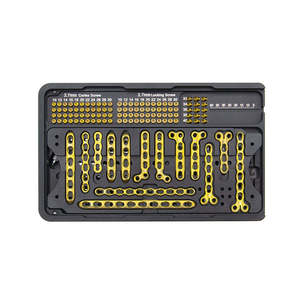
- Anterior Clavicle & Acromioclavicular (AC) Joint Locking Plates: 2.7mm / 3.5mm LCP anatomical plates featuring lateral extension options for complex distal clavicle fractures.
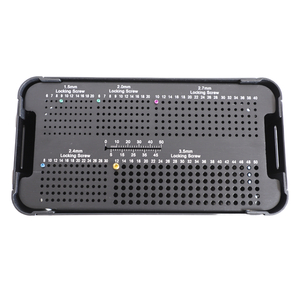
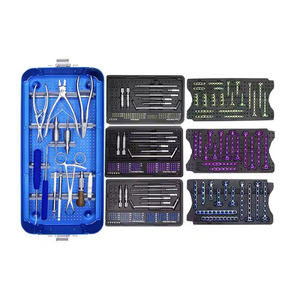
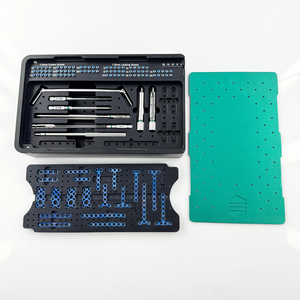
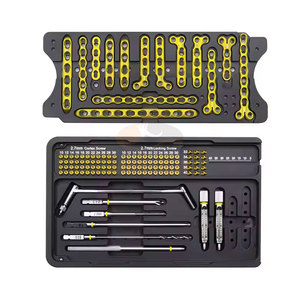
- Mini-Micro Fragment Modular Sets (1.5mm to 2.7mm): Designed for micro-fixation of coracoid transfer procedures (Latarjet technique) and small bone fragments around the glenoid rim.
Enterprise Strengths & Global Manufacturing Authority
Building Trust with Hungarian Medical Distributors and Healthcare Systems Through Certified Precision
1,000+ CDSCO & ISO Approvals
Uteshiya Medicare holds one of the largest certified implant registries worldwide. Every batch undergoes stringent dimensional inspection using optical comparators and automated coordinate measuring machines (CMM).
ISO Class 7 Cleanroom Manufacturing
Our in-house sterile processing and packaging facilities meet cleanroom environment regulations, providing Gamma-irradiated or EO-sterilized implants ready for immediate deployment in Hungarian operating rooms.
Exporting to 30+ Global Nations
With an established international distribution footprint, we provide reliable freight routing to Budapest (Liszt Ferenc International Airport), Central European logistics hubs, and regional Hungarian healthcare depositories.
Custom Patient-Specific Implants
Utilizing 3D DICOM reconstruction from CT/MRI scans, our engineering team manufactures custom titanium implants tailored for severe shoulder joint bone loss and complex revision surgeries.
Full CE & EU MDR Technical Files
We provide detailed technical documentation, material safety data sheets (MSDS), risk management files (ISO 14971), and clinical evaluation reports (CER) required by Hungarian hospital procurement authorities (OKFŐ).
Flexible OEM / B2B Solutions
Empowering Hungarian medical device companies and regional distributors with white-label manufacturing, custom laser marking, modular tray customization, and rapid prototype turnarounds.
Localized Application & Market Dynamics in Hungary
Tailored Solutions for Hungary's Public Health Infrastructure, Private Surgical Chains, and Regional Trauma Network
Clinical Application Scenarios Across Hungarian Medical Centers
1. Public University & Regional Hospitals: Institutions such as the University of Szeged Clinical Centre, University of Pécs Medical School, and Borsod-Abaúj-Zemplén County Hospital in Miskolc handle high volumes of emergency orthopedic trauma and reconstructive shoulder surgeries. Our 2.7mm locking plates and 316L SS mini-fragment sets provide cost-effective durability required by national health tenders.
2. Sports Traumatology & Arthroscopy Centers: Hungary has a rich athletic culture with high participation in sports like handball, water polo, football, and swimming. This creates high clinical demand for shoulder stabilization (Bankart & Slap repair) in specialized clinics in Budapest. Our titanium suture anchors deliver immediate primary fixation, accelerating postoperative rehabilitation cycles.
3. Private Healthcare Chains (TritonLife, Medicover, Doktor24): Private elective surgical centers demand premium-grade, minimally invasive instruments that minimize patient hospital stays. Our ergonomically designed driver handles, drill guides, and bio-compatible anchors integrate seamlessly into outpatient shoulder arthroscopy procedures.
Hungary Market Trends & Procurement Forecast (2025–2030)
• Transition to Centralized Public Procurement (OKFŐ Tenders): The Hungarian National Healthcare Directorate General (OKFŐ) and National Health Insurance Fund Management (NEAK) are increasingly seeking direct manufacturer partnerships that combine high clinical safety with cost containment.
• Acceleration of Minimally Invasive Surgery (MIS): Arthroscopic repair rates in Hungary are growing at a CAGR of 6.8%, replacing traditional open shoulder surgeries. Supplies of specialized arthroscopy anchors, cannulated screws, and instrument trays are experiencing record demand.
• Demand for Direct Manufacturer Logistics: Importers in Budapest, Debrecen, and Győr are bypassing expensive Western European middlemen, opting for direct OEM supply contracts from validated ISO 13485 manufacturers who offer full regulatory assistance.
Frequently Asked Questions (FAQ) for Hungarian Buyers
Essential Regulatory, Technical, and Logistics Insights for Healthcare Distributors and Procurement Directors in Hungary
Do your shoulder arthroscopy implants comply with Hungarian & European Union regulations?
Yes. All Uteshiya Medicare implants are manufactured under ISO 13485:2016 quality management systems. We supply complete technical dossiers, material certificates (ASTM F136 / ASTM F138), ISO 10993 biocompatibility testing, and CE documentation necessary for registration and tender participation under Hungarian health guidelines (NEAK / OKFŐ).
What are the typical shipping leads times to Budapest and other Hungarian regional centers?
Standard inventory items are dispatched within 3 to 5 business days via express international air freight (DHL, FedEx, or specialized medical logistics) directly to Budapest Liszt Ferenc International Airport (BUD), reaching your warehouse within 5–7 transit days. Bulk tender orders are scheduled according to contract agreements.
Are implants supplied in pre-sterilized packaging or non-sterile for autoclave processing?
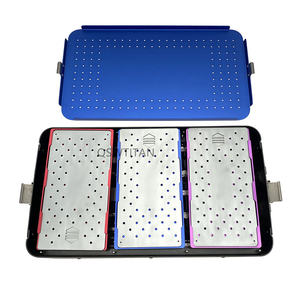
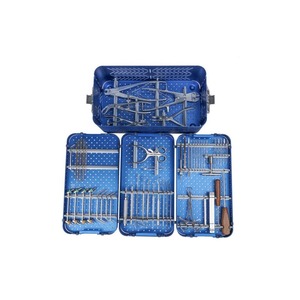
We offer both options depending on distributor preference. Implants can be delivered in sterile double-blister Tyvek packaging (Gamma/EO sterilized with 5-year shelf-life stability) or non-sterile bulk packaging along with autoclavable anodized aluminum instrument trays.
Can Hungarian distributors request custom laser markings or white-label packaging?
Absolutely. We offer complete OEM/ODM white-label services including custom laser etching of lot numbers, product reference codes, distributor brand logos, and custom barcode labels matching your regional inventory management systems.
What is the minimum order quantity (MOQ) for surgical trial sets or initial hospital orders?
We maintain highly flexible MOQ policies to support new regional distributors in Hungary. Trial instrument sets and sample evaluation packages for clinical evaluation by hospital department heads can be arranged upon request.
How do your suture anchors perform compared to standard Western European brands?
Our suture anchors undergo rigorous comparative biomechanical pull-out and fatigue testing. They meet or exceed international standards for ultimate load capacity and displacement, offering Hungarian hospitals equivalent clinical reliability at a significantly reduced procurement cost.
Partner with a Trusted Global Orthopedic Implants Manufacturer
Equip your surgical facility or distribution network in Hungary with world-class shoulder arthroscopy anchors, titanium locking plates, and mini-fragment instrument systems. Contact our international sales engineering team today for technical catalogs, pricing, and tender support.