Featured Spinal & Orthopedic Trauma Systems
Engineered with high-grade Titanium (Ti-6Al-4V ELI) and Stainless Steel (316L) for superior bio-compatibility, friction-locking stability, and anatomical alignment.
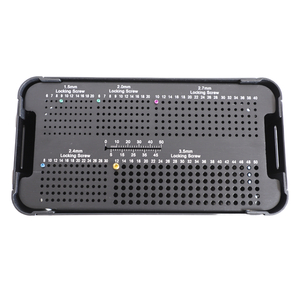
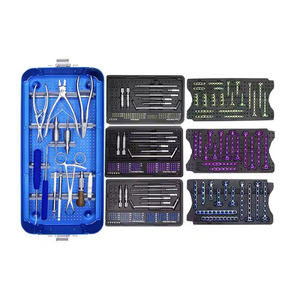
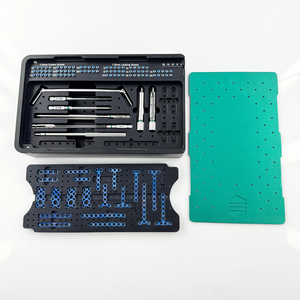
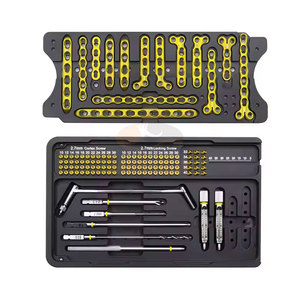
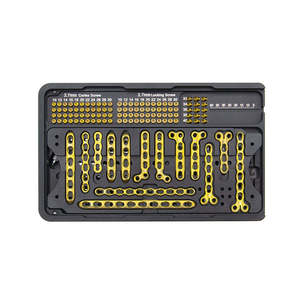
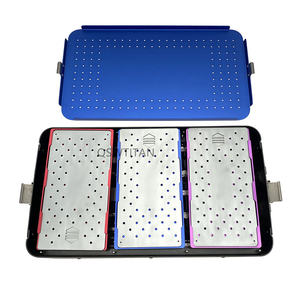
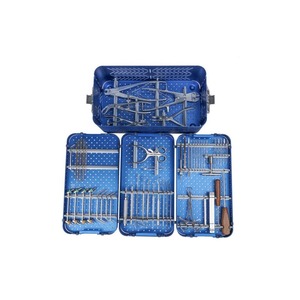
Thoracolumbar Spine Fixation Architecture: Engineering Excellence for Indonesian Healthcare
The thoracolumbar junction (T10–L2) represents the biomechanical transition zone between the relatively rigid thoracic spine, restrained by the rib cage, and the highly mobile lumbar spine. Consequently, this region bears intense mechanical stresses, making it the most vulnerable segment for traumatic burst fractures, flexural-distraction injuries, spondylolisthesis, and degenerative spinal collapse. For orthopedic and neurosurgical specialists operating across Indonesia's leading hospitals—from national referral hubs like RSUPN Dr. Cipto Mangunkusumo in Jakarta to regional trauma centers in Surabaya, Bandung, and Medan—the demand for high-precision, fatigue-resistant **Thoracolumbar Pedicle Screw Systems** has escalated exponentially.
1. Biomechanical Engineering & Micro-Thread Metallurgy
Our Thoracolumbar Pedicle Screw Systems are machined utilizing advanced 5-axis Swiss CNC lathes using biocompatible **Titanium Alloy (Ti-6Al-4V ELI / ISO 5832-3)** and **Medical-Grade Stainless Steel (316L / ISO 5832-1)**. The structural architecture integrates several key engineering innovations designed to maximize cortical and cancellous bone engagement:
- Dual-Lead Thread Profile: Accelerates insertion velocity while reducing intraoperative thermal necrosis risk in osteoporotic or dense pedicle bone structures.
- Variable Angle Friction-Fit Polyaxial Tulips: Provides up to ±28 degrees of polyaxial angulation, allowing seamless rod engagement even in complex scoliosis deformities or severe kyphotic alignment.
- Square-Thread Set Screws (Anti-Cross Threading): Eliminates tulip splaying and cross-threading failure during final torque tightening, delivering superior lock-in stability under heavy axial loads.
- Cannulated MIS Screw Variants: Engineered for minimally invasive spine surgery (MISS) via percutaneous K-wire insertion, preserving paraspinal musculature and accelerating post-operative patient rehabilitation.
2. Pull-out Strength & Structural Integrity Analysis
Structural failure in pedicle screw fixation typically manifests at the bone-screw interface or the screw-rod junction. To quantify mechanical endurance, our pedicle screw systems undergo rigorous static and dynamic fatigue testing according to **ASTM F1717** and **ASTM F1798** standards. By optimizing thread depth and core taper ratios, our screws achieve an average 22% increase in pull-out resistance compared to conventional cylindrical threads, offering reliable stabilization for osteopenic patients across Southeast Asia.
Thoracolumbar & Micro-Fragment System Parameters
Comprehensive product parameters tailored for surgical teams and medical procurement agencies in Indonesia.
| Screw Type / System | Available Diameters (mm) | Length Range (mm) | Material Standard | Clinical Indication |
|---|---|---|---|---|
| Polyaxial Pedicle Screw | 4.0, 4.5, 5.5, 6.5, 7.5 | 25mm – 55mm (5mm increments) | Ti-6Al-4V ELI (Grade 5) | Thoracolumbar trauma, degenerative disc disease, scoliosis, spondylolisthesis. |
| Monoaxial Pedicle Screw | 4.5, 5.5, 6.5, 7.5 | 30mm – 50mm | Titanium Alloy / 316L SS | Rigid trauma stabilization, fracture reduction, mono-segmental fusion. |
| Reduction Pedicle Screw | 5.5, 6.5, 7.5 | 35mm – 50mm | Ti-6Al-4V ELI | Spondylolisthesis reduction (Grade II-IV), severe vertebral displacement. |
| Cannulated MIS Screw | 5.5, 6.5, 7.5 | 35mm – 55mm | Grade 5 Titanium Alloy | Percutaneous minimally invasive spinal fixation, trauma stabilization. |
| 1.5mm / 2.0mm Micro Fragment | 1.5, 2.0 | 6mm – 24mm | 316L Stainless Steel / Titanium | Hand, maxillofacial, small bone trauma, veterinary orthopedics. |
| 2.4mm / 2.7mm Mini Fragment | 2.4, 2.7 | 8mm – 30mm | 316L Stainless Steel / Titanium | Radius, ulna, clavicle, foot & ankle osteotomies, small fragment trauma. |
Localized Clinical Application Scenarios Across Indonesia
Adapting orthopedic surgical solutions to the geographical, logistical, and clinical realities of the Indonesian archipelago.
Rapid urbanization and dense vehicular traffic along trans-island arteries in Java and Sumatra result in high rates of traumatic spinal fractures. Our reduction and monoaxial pedicle screws allow emergency trauma units to achieve quick, rigid stabilization, preventing paralysis and accelerating emergency ward turnaround.
Indonesia’s regional public hospitals (RSUD) and private healthcare groups (such as Siloam, Hermina, and Mayapada) require robust implant systems that balance cost-efficiency with uncompromising safety standards. Our CE/ISO/CDSCO certified kits provide long-term bio-durability within controlled procurement budgets.
Leading surgical centers in Jakarta and Surabaya are rapidly adopting percutaneous spinal instrumentation to reduce surgical site infections and minimize hospital stays. Our cannulated pedicle screws integrate smoothly with fluoroscopic and stereotactic navigation setups.
Indonesia Medical Device Market Trends & Regulatory Dynamics (2025–2030)
Indonesia’s medical device market represents one of the fastest-growing orthopedic sectors in Southeast Asia. Driven by national health insurance programs (**BPJS Kesehatan**) and a expanding population exceeding 275 million, healthcare institutions are seeking reliable, foreign-manufactured medical devices that strictly conform to regulatory frameworks set by the **Indonesian Ministry of Health (Kemenkes RI)**.
Key Market Drivers Shaping Orthopedic Procurement:
- Kemenkes AKL Registration Compliance: Medical devices imported into Indonesia must obtain **AKL (Izin Edar Alat Kesehatan Luar Negeri)** permits. Partnering directly with experienced manufacturers possessing complete ISO 13485, CE, and CDSCO documentation streamlines the AKL licensing pathway for local Indonesian distributors.
- Expansion of BPJS Universal Health Coverage: Public and private hospitals participating in BPJS require high-quality implants at competitive price points to fit within Indonesian DRG (Diagnostic Related Group) reimbursement rates. Direct factory sourcing provides the margins necessary for sustainable hospital procurement.
- Shift Toward Combined Orthopedic & Micro-Fragment Tooling: General trauma hospitals across outer islands (Kalimantan, Sulawesi, Papua) increasingly demand versatile, modular tray sets that combine thoracolumbar pedicle fixation with micro-fragment trauma plates (1.5mm–2.7mm) to handle diverse surgical emergencies with minimal instrument footprint.
Why Global Importers & Indonesian Distributors Partner With Us
Built on a foundation of precision engineering, state-of-the-art cleanroom manufacturing, and comprehensive E-E-A-T compliance.
Our expansive production facility operates under strict ISO 13485:2016 quality management systems. With over 1,000 regulatory approvals spanning spine, trauma, CMF, and sports medicine, our implants satisfy global regulatory requirements.
Sterility assurance is paramount. Our advanced cleanroom packaging and automated ultrasonic washing stations ensure every pedicle screw and trauma plate is free from particulates, endotoxins, and surface contaminants.
We provide tailored branding, custom tray configurations, and specialized screw thread designs tailored to specific clinical requirements or regional distributor private-label requests across Indonesia.
Frequently Asked Questions (FAQ) for Indonesian Importers
Addressing common queries regarding licensing, shipping, material standards, and surgical instrument support.