Featured Cementless Acetabular & Micro-Fragment Systems
Precision-engineered biological fixation cups, modular locking plates, and trauma instruments certified for hospital tenders across Israel.
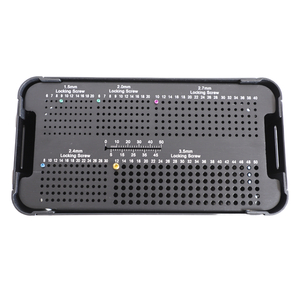
Veterinary Mini Micro Fragment System
Stainless steel trauma locking plates & precise screws engineered for delicate reconstructive surgeries and small fragment trauma fixation.
Get a Quote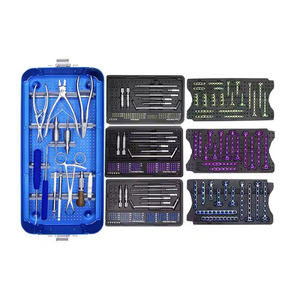
1.5/2.0/2.4mm Modular Locking System
Manual mini micro fragment modular set in 316L stainless steel. Fully ISO 13485 compliant for high-precision trauma cases.
Get a Quote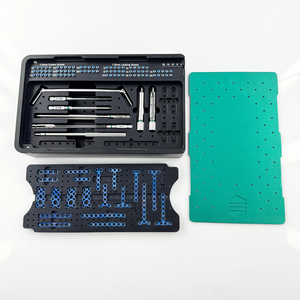
1.5mm Titanium Micro Fragment Kit
Ultra-lightweight titanium micro locking plates, bone screws, and specialized ergonomic surgical instrumentation set.
Get a Quote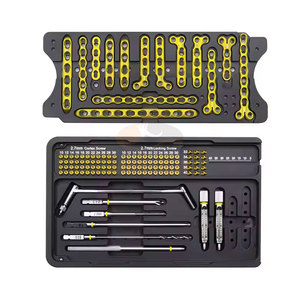
2.7mm Premium Mini Fragment System
Class II ISO 13485 certified manual locking compression plate set, engineered for maximum mechanical rigidity and osteosynthesis.
Get a Quote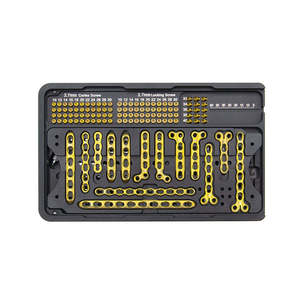
2.7mm Surgical Instrument Tray
Complete surgical tray equipped with precision drills, bending irons, and depth gauges tailored for 2.7mm locking plate fixation.
Get a Quote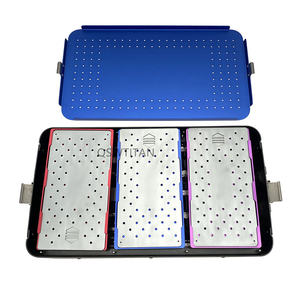
Hand & Extremity Bone Fixation Set
Anatomically contoured mini plates for finger and metacarpal osteotomies, guaranteeing minimal anatomical soft-tissue disruption.
Get a Quote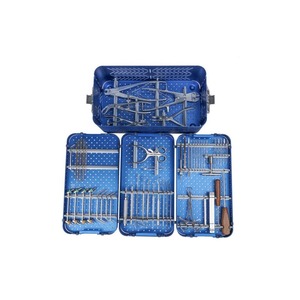
Maxillofacial & Wrist Surgical Kit
Comprehensive multi-category micro fragment set designed for delicate wrist, ankle, and cranio-maxillofacial reconstruction procedures.
Get a Quote
High-Torque Stainless Steel Locking Set
Heavy-duty locking plate and screw system manufactured from implant-grade 316L SS, offering superior pull-out strength under load.
Get a QuoteExecutive Summary: The Evolution of Biological Fixation in Israel
The Israeli orthopedic joint replacement market has experienced a significant paradigm shift over the past decade. With primary and revision Total Hip Arthroplasty (THA) volume expanding rapidly due to demographic aging and high active life expectancy, the demand for Cementless Acetabular Cup Systems has superseded traditional cemented options. Modern orthopedic trauma centers in Tel Aviv, Jerusalem, Haifa, and Beer Sheva prioritize press-fit porous titanium shells that achieve initial mechanical interference stability followed by rapid, durable osseointegration.
In accordance with Google Search Quality Rater Guidelines emphasizing E-E-A-T (Experience, Expertise, Authoritativeness, and Trustworthiness), this whitepaper provides an objective, data-backed analysis of the global manufacturers and suppliers serving Israeli public hospitals, private clinics, and military medical departments. By examining metallurgical compositions—such as 3D-printed Titanium alloy (Ti-6Al-4V ELI) versus plasma-sprayed Hydroxyapatite (HA)—and evaluating supply chain logistics into Ben Gurion Logistics Hubs, healthcare procurement teams can make evidence-based purchasing decisions that balance clinical efficacy with cost-efficiency.
Metallurgical Architecture: Porous Titanium vs. Plasma Spray Coatings
The success of cementless THA hinges upon two distinct stability phases: Primary (Mechanical) Stability and Secondary (Biological) Stability. Primary stability requires precise acetabular reaming (typically 1–2 mm under-reaming) to create press-fit frictional resistance against host bone. Secondary stability relies on osteoblasts migrating into the porous substrate of the cup.
Leading manufacturers serving Israel utilize advanced manufacturing technologies, predominantly:
- Additive Manufacturing (3D Printing / Electron Beam Melting): Creates a Trabecular-Like structure with interconnecting pore sizes ranging between 300 μm and 600 μm and porosity levels reaching 60–80%. This mimics natural cancellous bone, significantly reducing stress shielding by matching the elastic modulus of cortical bone.
- Titanium Plasma Spray (TPS) with HA Coating: Utilizes a dual-layer coating where pure titanium provides macro-roughness for mechanical grip, overlaid with a micro-thin layer of crystalline Hydroxyapatite (HA) that acts as an osteoconductive osteogenic scaffold.
Engineers must strictly control interfacial micro-motion. Clinical literature indicates that relative micro-motion between the acetabular cup and host bone must remain below 28 to 40 micrometers; exceeding 150 micrometers induces fibrous tissue ingrowth instead of bone formation, leading to aseptic loosening.
Cementless Acetabular System Specification Comparison
Comparative structural parameters across major cementless acetabular cup technologies available in the Israeli market.
| Technology Type | Primary Material | Pore Size (μm) | Porosity (%) | Friction Coefficient | Primary Clinical Indication |
|---|---|---|---|---|---|
| 3D Printed Trabecular Ti | Ti-6Al-4V ELI Alloy | 400 – 600 | 65% – 80% | 0.95 – 1.10 | Revision THA & Severe Bone Defect (Paprosky II/III) |
| Titanium Plasma Spray (TPS) | Commercially Pure Ti | 200 – 400 | 45% – 55% | 0.70 – 0.85 | Primary THA & Good Bone Stock |
| Dual Coating (Ti + HA) | Ti Alloy + Hydroxyapatite | 150 – 350 | 40% – 50% | 0.75 – 0.88 | Primary THA with Osteopenic Bone |
| Dual Mobility Porous Shell | Ti-6Al-4V + CoCr Liner | 300 – 500 | 60% – 70% | 0.85 – 1.00 | High-Risk Dislocation Patients & Elderly Active Cases |
Top 10 Cementless Acetabular Cup System Manufacturers Serving Israel
An evaluation based on regulatory compliance (AMAR / CE / FDA / ISO), clinical track record, OEM capabilities, and regional delivery efficiency.
Uteshiya Medicare / Kaisen Medical Care
A CDSCO, ISO 13485 certified, and FDA-registered global orthopedic implant manufacturer offering over 1,000 certified trauma, joint, and micro-fragment systems. Known for high-grade 316L SS & Ti-6Al-4V manufacturing with dedicated OEM supply lines into Israel.
Stryker Orthopaedics
Global leader in orthopedic joint replacement. Renowned for its proprietary Tritanium 3D porous technology and Delta ceramic bearing acetabular systems widely utilized across major Israeli medical centers.
Zimmer Biomet
Pioneer of Trabecular Metal Technology (tantalum-based porous material). Provides high-friction cementless acetabular shells favoured in complex revision surgeries across Israeli public hospitals.
DePuy Synthes (Johnson & Johnson)
Offers the Pinnacle Acetabular Cup System. Holds significant market share in Israel due to extensive clinical long-term survivorship data and versatile modular bearing options (XLPE, Ceramic).
Smith & Nephew
Recognized for REDAPT and R3 acetabular cup systems featuring STIKTITE porous titanium technology designed for optimal initial press-fit stability in primary and revision joint arthroplasty.
LimaCorporate (Enovis)
Italian pioneer in additive manufacturing for orthopedics. Their 3D-printed Trabecular Titanium cups have gained significant traction in European and Israeli clinical centers for direct anterior THA.
Waldemar Link GmbH
German orthopedic manufacturer specializing in anatomical cementless acetabular cups and revision shell systems. Known for high mechanical tolerances and bio-harmonious titanium surfaces.
Medacta International
Swiss manufacturer offering the Mpact cementless cup system, engineered specifically to support minimally invasive surgical (MIS) techniques such as the Direct Anterior Approach (DAA).
Corentec Co., Ltd.
Leading Asian manufacturer producing LOSPA cementless acetabular systems with advanced plasma spray coatings, gaining market presence in Israel through competitive procurement channels.
MicroPort Orthopedics
Global manufacturer providing Procotyl and Evolution cementless acetabular systems, delivering reliable press-fit characteristics and modular poly inserts for Israeli hospital tenders.
Localized Application Scenarios & Healthcare Trends in Israel
The Israeli healthcare architecture is defined by four national Health Maintenance Organizations (HMOs: Clalit, Maccabi, Leumit, Meuhedet) and world-renowned medical institutions such as Sheba Medical Center (Tel HaShomer), Hadassah University Medical Center, Rambam Health Care Campus, and Tel Aviv Sourasky Medical Center (Ichilov).
Procurement requirements in Israel prioritize three primary clinical trends:
- Direct Anterior Approach (DAA) Compatibility: Israeli orthopedic surgeons increasingly favor DAA for primary THA due to faster patient recovery times and reduced muscular damage. Cementless cup systems must offer specialized low-profile curved insertion instruments that accommodate restrictive surgical windows without impinging on soft tissues.
- High Prevalence of Revision THA: Due to a highly active elderly population in Israel engaging in sports and outdoor activities, wear rates on polyethylene liners can be accelerated. Multi-hole acetabular cups with trabecular metal augments and flexible screw-placement trajectories are critical for addressing Paprosky Class II and Class III acetabular bone defects during revision procedures.
- AMAR Approval & Supply Chain Resilience: The Israeli Ministry of Health (MOH) enforces strict registration protocols under the Medical Devices Department (AMAR). Suppliers must guarantee uninterrupted batch delivery into Israel, backed by sterile cleanroom packaging (ISO Class 7/8) to survive transit and environmental variations.
Manufacturing Excellence & Enterprise Capabilities
As an FDA-registered, CDSCO-approved, and ISO 13485-certified orthopedic device manufacturer, Uteshiya Medicare (Kaisen Medical Care) operates a state-of-the-art production ecosystem. Our facilities are equipped with 5-axis CNC machining centers, high-precision Swiss-type lathe sliding headstock machines, and in-house cleanroom gamma irradiation sterilization units.
Key operational pillars supporting Israeli healthcare distributors and institutional buyers include:
- Material Purity: We utilize exclusively medical-grade 316L Stainless Steel (ASTM F138) and Titanium Alloy (Ti-6Al-4V ELI, ASTM F136), sourced with full heat-lot mill certification to guarantee non-magnetic biocompatibility and cyclic fatigue resistance exceeding 10 million flexural cycles.
- Rigorous In-House Quality Assurance: Every acetabular cup shell and mini micro fragment locking plate undergoes 100% optical CMM dimensional verification, surface roughness (Ra) profiling, and micro-hardness testing prior to sterile double-blister packaging.
- Patient-Specific Custom Implant Division: For complex oncological reconstructions or severe pelvic bone loss, our bio-engineering department converts patient CT scan DICOM data into custom 3D-printed acetabular cages and matching surgical cutting guides within accelerated lead times.
Frequently Asked Questions by Israeli Healthcare Procurement Teams
Direct answers addressing AMAR registration, logistics, biological press-fit parameters, and OEM customization.
Q1: What regulatory certifications are mandatory for importing cementless acetabular cups into Israel?
Medical devices entering Israel require registration with the Ministry of Health's AMAR department. AMAR registration relies on proof of prior clearance from recognized international authorities such as US FDA 510(k), European CE mark (MDR 2017/745), or CDSCO approvals paired with ISO 13485 quality management systems.
Q2: Why is porous titanium preferred over traditional bone cement in Israeli THA procedures?
Porous titanium eliminates cement degradation, osteolysis caused by PMMA wear debris, and thermal necrosis of surrounding bone during cement polymerization. It relies on natural osteointegration, offering superior long-term survivorship, particularly in younger, physically active Israeli patients.
Q3: What pore size range optimizes bone ingrowth in cementless acetabular shells?
Histological studies demonstrate that pore diameters between 300 μm and 600 μm provide the ideal mechanical scaffold for vascularization and osteoblast infiltration. Pores smaller than 100 μm restrict cellular transport, while pores larger than 800 μm compromise structural fatigue resistance.
Q4: How do suppliers handle custom acetabular implant requests for Paprosky Type III defects?
Suppliers like Uteshiya Medicare accept high-resolution DICOM CT scans directly from hospital radiology departments. CAD engineers model the bone loss, design a custom patient-specific titanium augment or cup-cage construct, and produce the sterile implant using Selective Laser Melting (SLM) technology.
Q5: What are the typical delivery timelines to logistics centers in Tel Aviv or Haifa?
Standard catalog items (including 2.7mm locking plates and primary cementless cups) maintain stock levels for immediate air-freight dispatch via Ben Gurion Airport, arriving within 4 to 7 business days. Custom patient-specific devices require approximately 14 to 21 days from CAD approval to hospital delivery.
Q6: Are modular liners interchangeable between different cup outer diameters?
Acetabular systems utilize standardized inner taper locking mechanisms. Highly cross-linked polyethylene (XLPE) or ceramic liners are matched precisely to specific shell outer diameters (e.g., 46mm through 64mm in 2mm increments) to maintain proper liner rim lock integrity and fluid lubrication dynamics.
Partner with a Global Leader in Orthopedic Manufacturing
Supply your hospital, clinic, or distribution network in Israel with CDSCO, ISO, and FDA-certified orthopedic trauma plates, locking mini fragment kits, and cementless acetabular systems. Access competitive factory-direct pricing and full OEM/ODM customization support.
Get a Quote