⚡ Featured Surgical Systems & Implant Assemblies
Explore our high-precision spinal interbody systems, micro-fragment fixation solutions, and specialized orthopedic instrumentation. Designed to support Minimally Invasive Spine (MIS) procedures, intraoperative height restoration, and rigid osteosynthesis in ambulatory surgery centers (ASCs) and academic medical centers.
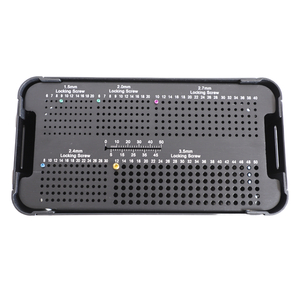
Veterinary & Human Mini Micro Fragment System Stainless Steel Trauma Plates Locking Screws
Contact Us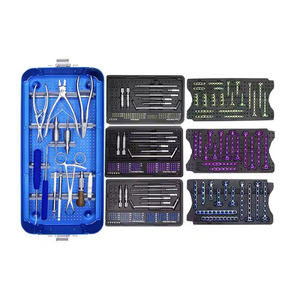
Stainless Steel Manual Mini Micro Fragment Locking Plate Modular Fixation Set (CE / ISO)
Contact Us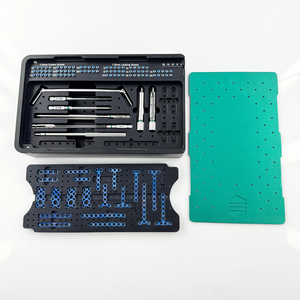
1.5mm Mini Micro Fragment Locking Kit with Titanium Plates & Precision Instruments
Contact Us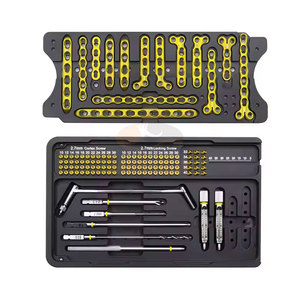
Premium Orthopedic Mini Fragments 2.7mm Stainless Steel Manual Locking Plate Set
Contact Us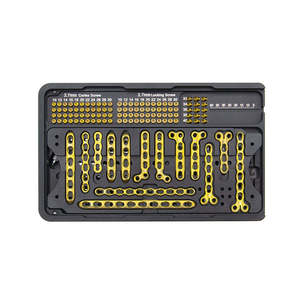
Orthopedic Manual Mini Fragments 2.7mm Steel Locking Plate Instrument Set
Contact Us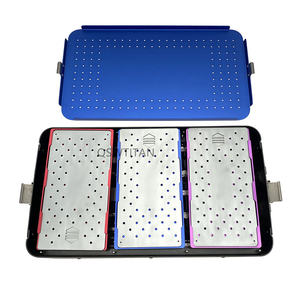
Mini Fragment Instrument Set Plate Screw Implant Locking System for Extremity Surgery
Contact Us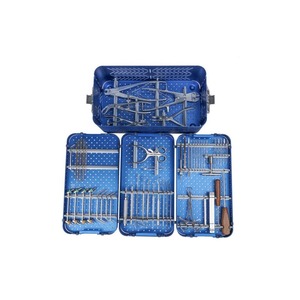
Premium Mini Micro Fragment System Locking Plate Screw Instrument Hand/Foot Kit
Contact Us
Eaven Mini Micro Fragment System Trauma Plate Locking Implants & Instrument Kit
Contact Us📊 Global Manufacturing Footprint & Clinical Metrics
As healthcare providers across Washington State shift toward outpatient spine procedures and value-based care, the demand for predictable, high-expansion interbody devices has accelerated. Our production facilities maintain rigorous quality management standardizations to supply hospital networks and distributors in the USA and over 30 countries.
🔬 Executive Technical Overview: Expandable Interbody Cage Technology in Seattle
The Seattle healthcare corridor—anchored by world-renowned research centers such as UW Medicine, Swedish Health Services, Virginia Mason Franciscan Health, and Overlake Medical Center—represents one of the most technologically advanced spinal surgery markets in North America. Over the past decade, spinal fusion protocols across King, Snohomish, and Pierce counties have undergone a paradigmatic transition from static PEEK (Polyetheretherketone) and rigid titanium cages toward dynamic, expansion-capable interbody devices.
In traditional Transforaminal Lumbar Interbody Fusion (TLIF) and Posterior Lumbar Interbody Fusion (PLIF), static implants frequently force surgeons to compromise between insertion footprint size and post-expansion height restoration. Inserting a large static cage through a narrow neural aperture increases the risk of root nerve retraction injuries, dura tears, and endplate damage. Conversely, expandable spinal interbody cages allow a compact initial profile during insertion, followed by continuous, controlled intraoperative expansion in both height and lordotic angle once safely seated within the disc space.
Biomechanical Superiority & Information Gain Analysis
When evaluating suppliers for Seattle-area Ambulatory Surgical Centers (ASCs) and tertiary care hospitals, clinical procurement teams analyze three primary biomechanical vectors:
Sagittal Balance Restoration
Stepless lordotic expansion (up to 15°–20°) allows precise restoration of segmental lordosis, reducing adjacent segment disease (ASD) rates in complex adult spinal deformities.
Endplate Subsidence Mitigation
Controlled hydraulic or mechanical expansion distributes tactile resistance across the subchondral bone, eliminating excessive impaction forces associated with static cage insertion.
Optimized Graft Volume
Post-expansion graft chamber delivery systems enable post-packing of cellular allografts or synthetic bone substitutes directly against prepared endplates for enhanced arthrodesis.
Clinical Benchmarks: Static vs. 3D-Printed Titanium Expandable Cages
| Performance Characteristic | Static PEEK Cages | Solid Titanium Expandable | 3D-Printed Porous Ti Expandable |
|---|---|---|---|
| Insertion Profile | Fixed (Requires nerve retraction) | Contracted / Low-profile | Ultra-Low Profile / Beveled Tip |
| Lordosis Customization | Fixed Angles (0°, 4°, 8°) | Mechanically Adjustable (0°–15°) | Stepless Dynamic Adjustability (0°–20°) |
| Modulus of Elasticity | 3.6 GPa (Close to cortical bone) | 110 GPa (Mismatch potential) | Surrogate Porous Architecture (4–8 GPa) |
| Osseointegration Capacity | Hydrophobic / Smooth Surface | Moderate (Macro-texture dependent) | Superior (Bone Ingrowth & Through-growth) |
| Seattle ASC Suitability | Declining adoption | Moderate adoption | Primary Standard of Care |
🏆 Top 10 Expandable Spinal Interbody Cage Suppliers & Exporter Evaluation for Seattle
Navigating medical device procurement in the Pacific Northwest requires a balance between technological innovation, regulatory compliance (FDA 510(k), ISO 13485), supply chain resilience, and cost-effectiveness. Below is the curated industry benchmark ranking of leading exporters and manufacturers supplying expandable spinal solutions to the Greater Seattle healthcare ecosystem.
Uteshiya Medicare / Kaisen Medical Care
Global OEM/ODM Exporter specializing in CDSCO & ISO 13485-certified spinal implant kits, titanium locking plates, and custom expandable cage assemblies. Trusted in 30+ countries with robust USA distribution partnerships.
Globus Medical (Rise® & Elsagrid Systems)
Major tier-1 spinal hardware provider in Seattle hospitals, offering expandable TLIF/LLIF devices with integrated insertion and expansion mechanics.
Stryker Spine (Sahara® Expandable System)
Established footprint in Puget Sound trauma centers, supplying active height expansion systems with titanium porous surface structures.
Medtronic Spine (ELIF & Catalyft™ Expandable Cages)
Extensive clinical adoption across Washington State, incorporating robotic-assisted surgery integration and titanium expansion technology.
DePuy Synthes (Condux® & Conduit™ Systems)
Johnson & Johnson MedTech division supplying 3D-printed cellular titanium expandable implants for complex spinal reconstruction.
Seaspine / Orthofix (Mariner® & WaveForm® Cages)
Specialized manufacturer providing porous architectural cages designed for maximum bone graft containment in MIS procedures.
Astura Medical (Elara™ Expandable Interbody)
High-growth independent spine provider focusing on intuitive instrumentation and continuous expansion mechanisms for surgical speed.
Life Spine (ProLift® Expandable System)
Pioneer in micro-expandable technology, catering to Seattle outpatient ASCs requiring minimal anatomical disruption.
Xtant Medical (Matryx® & Axle® Interbody Portfolios)
Regional supplier focused on combining structural biomaterial cages with advanced orthobiologic graft solutions.
Centinel Spine (STALIF® & FLX™ Technology Platforms)
Specialists in anterior and lateral interbody fusion technologies, featuring bio-engineered surface topographies for rapid fixation.
📍 Localized Clinical Application Scenarios in Seattle & Pacific Northwest
The practical deployment of expandable interbody cage technology varies based on facility operational dynamics across King County, Bellevue, Tacoma, and Everett. Understanding these localized clinical application scenarios ensures targeted procurement strategies:
Outpatient ASC Minimally Invasive Spine (MIS)
In Bellevue and Northgate ASCs, surgeons prioritize expandable TLIF cages with streamlined intraoperative instrumentation. Expandable implants shorten fluoroscopy times, minimize blood loss, and allow patients to be discharged within 23 hours post-op.
Revision Surgery for Spondylolisthesis
In tertiary centers dealing with complex grade I/II spondylolisthesis revision cases, hyper-lordotic expandable cages allow surgeons to reconstruct disc height and neural canal clearance without aggressive facetectomies.
Robotic & Navigation-Guided Fusion
With high adoption of intraoperative CT and navigation platforms (e.g., StealthStation, ExcelsiusGPS) in Downtown Seattle health systems, expandable cages with radiolucent markers provide real-time expansion verification under low radiation exposure.
🏭 Corporate Quality Infrastructure & Export Advantages
As an established global manufacturer and exporter, Uteshiya Medicare (Kaisen Medical Care) offers a vertically integrated manufacturing ecosystem that meets the exacting requirements of US hospital procurement networks, medical device distributors, and private lab brands.
Multi-National Regulatory Certifications
Holding CDSCO licenses for over 1,000 orthopedic implants, ISO 13485:2016 quality management compliance, and FDA-registered facilities. Every shipment is backed by complete Material Test Reports (MTR) and sterilization documentation.
In-House ISO Class 7 Cleanroom & Sterilization
Our state-of-the-art facility features dedicated cleanroom packaging lines and validated sterilization infrastructure, guaranteeing pyrogen-free, sterile-packaged implant delivery ready for immediate OR deployment.
Advanced Biocompatible Metallurgy
Utilizing ultra-premium 316L Stainless Steel and Medical Grade 5 Titanium Alloy (Ti-6Al-4V ELI). Precision 5-axis CNC Swiss machining ensures micrometer-level mechanical tolerances on expandable gears and thread mechanisms.
Streamlined Logistics to Pacific Northwest
Direct air-freight logistics protocols to Seattle-Tacoma International Airport (SEA) and Port of Seattle, ensuring expedited customs clearance, low lead times, and emergency consignment stocking support for regional distributors.
❓ Seattle Healthcare Procurement FAQ
Answers to common regulatory, logistical, and technical questions asked by spine surgeons, materials management directors, and medical equipment importers in Washington State.
What regulatory documentation is required to import expandable spinal interbody cages into Washington State?
Importing spinal implants into the United States requires FDA registration, 510(k) clearance for Class II device systems, and compliance with the FDA Quality System Regulation (21 CFR Part 820) / QMSR. ISO 13485 certification and complete Device History Records (DHR) are standard prerequisites for hospital vendor credentialing in Seattle health networks.
How do expandable cages reduce overall procedural costs for Ambulatory Surgical Centers (ASCs)?
While initial implant unit costs may differ from static cages, expandable systems significantly reduce surgical complications, shorten operative time, lower endplate fracture risk, and eliminate the need for extensive nerve root retraction. This reduces readmission rates and intraoperative fluoroscopy exposure, delivering a net positive economic benefit for ASC value-based care models.
Which CPT coding guidelines apply to expandable interbody fusion procedures in the Pacific Northwest?
Expandable spinal cages are typically billed under standard interbody fusion CPT codes, including CPT 22853 (Insertion of interbody biomechanical device(s) with integral anterior instrumentation) and CPT 22854/22859 where appropriate. Facilities should consult regional CMS Medicare Administrative Contractors (Noridian Healthcare Solutions for WA State) for specific coverage policies.
What titanium alloy grade is used in your expandable interbody cages and micro-fragment plates?
Our titanium implants utilize Ti-6Al-4V ELI (Extra Low Interstitial), meeting ASTM F136 standards. This medical-grade alloy provides exceptional biocompatibility, high fatigue strength, and low MRI artifact generation compared to conventional stainless steel alloys.
What is the average lead time for custom consignment orders delivered to Sea-Tac Airport?
For standard catalog items and pre-configured trauma/spine instrument sets, express air cargo delivery to Sea-Tac (SEA) averages 5 to 7 business days. Custom OEM/ODM orders or private-label bulk packaging typically operate on a 3 to 4-week production cycle following technical CAD sign-off.
Can your facility support OEM / ODM private labeling for US medical distributors?
Yes. We provide complete OEM/ODM manufacturing services, including custom laser marking, custom tray packaging, surface coating adjustments, and private-label box branding aligned with US FDA labeling regulations.
Partner with a Trusted Global Spinal Implants Exporter
Whether you are expanding your medical device distribution network in Seattle, outfitting a new ambulatory surgical center, or seeking reliable OEM manufacturing for expandable spinal systems, our engineering team is ready to assist.
Contact Us