Precision Orthopedic & Spinal Hardware Solutions
Direct Factory Supply for Polish Medical Importers & Healthcare Facilities
1. Executive Summary & Market Dynamics in Poland
The Polish spinal implants market is undergoing a rapid technological transition. Driven by modernization mandates across modern clinical networks in cities like Warsaw, Kraków, Poznań, and Wrocław, orthopedic departments are modernizing away from static PEEK (Polyether ether ketone) cages toward Expandable Interbody Fusion Cages. Modern spinal reconstructive procedures demand implants that facilitate minimally invasive surgical (MIS) insertion while enabling targeted, continuous height expansion and lordosis restoration in situ.
For Polish medical equipment distributors and hospital procurement officers navigating the strict public healthcare system managed by the NFZ (Narodowy Fundusz Zdrowia), sourcing high-tier expandable spinal interbody cages from elite Chinese manufacturers offers an unassailable strategic advantage. China's top medical device manufacturers now combine 5-axis Swiss CNC precision machining, 3D titanium printing (Ti-6Al-4V ELI), rigorous biomechanical validation under ASTM F2077 and ASTM F2267 standards, and full compliance with European Union Medical Device Regulations (EU MDR 2017/745).
This comprehensive B2B sourcing report evaluates the leading China-based original equipment manufacturers (OEMs) and exporters of expandable interbody cages tailored specifically for TLIF (Transforaminal Lumbar Interbody Fusion), PLIF (Posterior Lumbar Interbody Fusion), and LLIF/DLIF (Lateral Lumbar Interbody Fusion) procedures in the Polish orthopedic sector.
2. Technical Architecture of Expandable Spinal Cages
Expandable spinal interbody cages represent a major leap forward over traditional fixed-geometry implants. By inserting at a collapsed, reduced profile and expanding incrementally once correctly positioned within the intervertebral disc space, these devices minimize nerve root retraction, protect endplate structural integrity, and optimize biomechanical stability.
Continuous Height & Lordosis Adjustment
Mechanically driven drive-screw mechanisms allow progressive expansion (up to 4mm–7mm of expansion), restoring disk height and enabling customizable lordotic angle settings (0° to 15°) to suit individual sagittal alignment goals.
3D Printed Porous Titanium Structure
Manufactured using Direct Metal Laser Sintering (DMLS) with medical-grade Ti-6Al-4V ELI powder, featuring an interconnected microporous topology (50–70% porosity, 300–500 µm pore size) that accelerates osseointegration.
Post-Expansion Autograft Packing
Equipped with expansive central graft windows allowing post-expansion delivery of autologous bone graft or synthetic bone substitutes directly into the expanded chamber, ensuring dense 360-degree fusion columns.
Comparative Matrix: Expandable vs. Traditional Static Interbody Cages
| Biomechanical Parameter | Expandable Titanium/PEEK Cages (China OEM) | Traditional Static PEEK Cages | Clinical Advantage in Spine Surgery |
|---|---|---|---|
| Insertion Profile | Compact collapsed footprint (7mm - 9mm) | Fixed bulky height (10mm - 14mm) | Minimizes nerve root impetigo & muscular trauma |
| Lordosis Restoration | Dynamic post-expansion adjustment (0° - 15°) | Fixed static angle offset | Accurate restoration of sagittal balance |
| Subsidence Risk | Significantly reduced via controlled endplate fit | Elevated risk during aggressive trials | Preserves cortical endplate integrity |
| Osseointegration | 3D Trabecular Titanium coating & open lumen | Smooth hydrophobic PEEK surface | Accelerates early cellular bone ingrowth |
| Endplate Contact Area | Optimized parallel surface contact upon expansion | Point loading risks on non-parallel planes | Prevated post-operative graft migration |
3. Localized Application Scenarios & Polish Market Trends
Understanding the healthcare landscape in Poland is vital for establishing profitable, sustained medical device supply chains. The Polish spinal market exhibits clear demand vectors across two distinct sectors:
- Public Healthcare Infrastructure (NFZ Hospitals): Regional public university hospitals and clinical centers require high-volume, extremely reliable hardware that passes rigorous public tender processes (Przetargi Medyczne). Cages must meet strict economic threshold benchmarks without compromising CE certification or clinical outcome safety.
- Private Spine Clinics & Orthopedic Centers: Specialized private surgical centers in major metropolitan centers prioritize premium 3D-printed expandable cages that reduce operative time, shorten hospital stays (post-operative recovery within 24–48 hours), and enhance institutional clinical reputations.
- MIS (Minimally Invasive Spine) Surgery Growth: Polish orthopedic surgeons are rapidly adopting tubular retractor systems and endoscopic spinal fusion techniques. Chinese manufacturers delivering low-profile expandable TLIF cages designed specifically for insertion through standard 15mm–18mm tubular retractors gain immediate clinical preference.
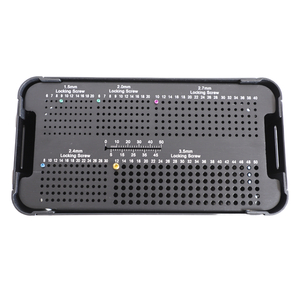
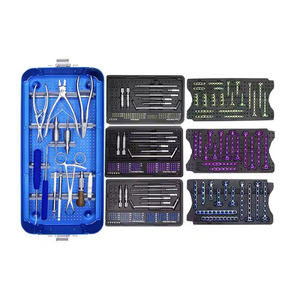
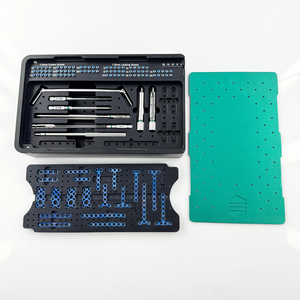
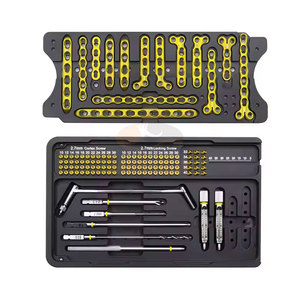
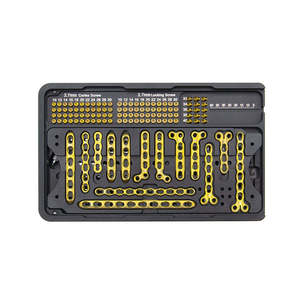
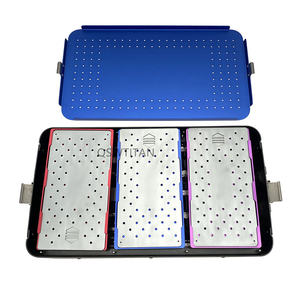
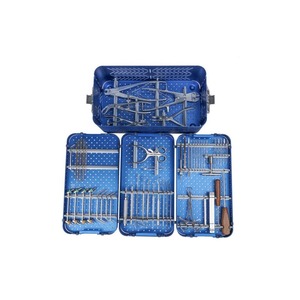
Top Chinese suppliers excel by delivering complete, ergonomic instrument kits alongside expandable cages. These include torque-limiting inserters, depth gauges, internal gear expansion drivers, and custom trial implants bundled in hard-anodized, autoclavable sterilization trays customized for Polish central sterile supply departments (CSSD / Centralna Sterylizatornia).
4. EU Regulatory Compliance & Quality Assurance Blueprint
Entering the Polish medical market requires rigorous compliance with the European Union's updated Regulatory Framework. Sourcing partners must ensure their Chinese manufacturing partner satisfies all EU MDR requirements:
EU MDR 2017/745 Certification
Class IIb medical device classification approval via EU Notified Bodies (such as TÜV SÜD, BSI, or SGS), backed by comprehensive Clinical Evaluation Reports (CER).
ISO 13485:2016 Certification
Full Quality Management System (QMS) implementation covering raw titanium/PEEK procurement, CNC machining, ultra-clean passivation, and cleanroom packaging.
UDI & EUDAMED Registration
Complete Unique Device Identification (UDI) barcoding laser-etched onto every spinal cage, fully registered within the EUDAMED database for seamless Polish healthcare tracking.
5. Core Manufacturing Competencies of Leading Chinese Suppliers
Leading Chinese orthopedic device hubs—located in Jiangsu (Changzhou/Suzhou), Zhejiang, and Guangdong—possess world-class manufacturing infrastructures that rival Western medical giants. Key highlights include:
- State-of-the-Art Swiss 5-Axis Machining: Ultra-precise multi-axis CNC milling centers (Citizen, Star, Tsugami) capable of executing tight micro-tolerances (±0.005 mm) required for internal expansion gears and smooth thread engagement.
- Class 10,000 Cleanroom Packaging: Automated washing, ultrasonic degreasing, passivation, and gamma-sterile or ETO-sterile double-pouch packaging ready for direct operating theater deployment.
- Custom OEM/ODM Private Labeling: Full white-label options, including custom laser marking of Polish brand logos, custom catalog numbers, personalized instrument tray configurations, and localized IFUs (Instructions for Use) in the Polish language.
- Extensive Biomechanical Testing Validation: Static compression, dynamic axial fatigue testing (run out to 5,000,000 cycles without failure), and static wear debris analysis conducted in accredited ISO 17025 testing laboratories.
6. Buyer FAQ for Polish Medical Importers & Distributors
Answers to common commercial, technical, and regulatory questions regarding expandable spinal cages
Partner with China's Premier Expandable Spinal Cage Manufacturer
Expand your orthopedic product portfolio in Poland with EU MDR compliant, factory-direct expandable interbody cages and dedicated instrument sets. Contact our international engineering team today for technical catalogs and wholesale pricing.