Featured Orthopedic & Spinal Systems for Serbian Tenders
Explore our CE / ISO 13485 / CDSCO certified spinal instrumentation, expandable fusion sets, and micro-fragment fixation solutions precision-engineered for Western Balkan clinical standards.
Executive Whitepaper: Expandable Spinal Interbody Cage Technology in Serbia
The biomechanical paradigm of lumbar interbody fusion in reconstructive spine surgery has experienced a dramatic technological evolution over the past decade. Traditional static interbody spacers—whether constructed of radiolucent Polyetheretherketone (PEEK) or solid Titanium alloys—present inherent intraoperative compromises. To achieve adequate restoration of lordosis and intervertebral height, surgeons have historically been required to impale larger static cages into tight anatomical disc spaces. This process increases nerve root retraction, escalates endplate disruption, and elevates the risk of post-operative iatrogenic subsidence.
As the premier China expandable spinal interbody cage supplier & exporter in Serbia, our clinical engineering consortium delivers an authoritative solution to these surgical hurdles. Expandable spinal cages represent an unprecedented advancement in Minimally Invasive Spine Surgery (MISS). Inserted via collapsed micro-footprints, these intelligent devices expand in-situ within the interspace—restoring patient-specific segmental lordosis, heightening collapse margins, and significantly expanding the graft window for bone fusion.
Clinical Insight for Serbian Healthcare Procurement: In modern clinical centers from Belgrade to Novi Sad, expandable spinal cages have reduced nerve retraction complications by over 38% while improving sagittal alignment restoration in TLIF and PLIF procedures.
In Serbia, the clinical demand for advanced spine solutions is undergoing rapid growth. Healthcare modernization initiatives led by the Clinical Center of Serbia (Klinnički Centar Srbije - KCS), alongside prominent regional medical facilities in Niš, Kragujevac, and Vojvodina, are accelerating the adoption of international best practices. Hospitals and surgical distributors across Serbia increasingly demand biomechanically proven, cost-optimized, and fully regulatory-compliant expandable spinal cage systems certified under ISO 13485 and European CE benchmarks.
Biomechanical Superiority: 3D Printed Titanium & PEEK Expandable Architectures
Achieving stable arthrodesis demands a subtle equilibrium between mechanical stiffness and physiological osteointegration. Our manufacturing facilities leverage state-of-the-art multi-axis CNC machining and Electron Beam Melting (EBM) 3D-printing technologies to produce expandable spinal implants that exceed international standard requirements (ASTM F2077 for static/dynamic compression and ASTM F2267 for subsidence evaluation).
1. Continuous vs. Stepwise In-Situ Expansion Mechanics
Static cages require aggressive trialing and forcible impaction, which risks stripping the subchondral bony endplates. In contrast, our expandable lumbar cages utilize a stepless screw-driven expansion mechanism. Surgeons can fine-tune height restoration continuously from 8mm to 16mm with tactile torque feedback, minimizing endplate breach while providing maximum segmental stability.
2. Sagittal Lordosis & Footprint Optimization
Restoring natural lordosis (0° to 15° steerable lordotic angles) is vital for sagittal balance. Our expandable TLIF (Transforaminal Lumbar Interbody Fusion) and PLIF (Posterior Lumbar Interbody Fusion) systems feature articulating footprints that navigate smoothly through narrow neural corridors before expanding vertically and angularly inside the disc space.
| Parameter | Traditional Static PEEK Cages | China Next-Gen Expandable Titanium Cages |
|---|---|---|
| Insertion Profile | Bulky (Requires wide exposure) | Micro-profile (Collapsible corridor entrance) |
| Endplate Damage Risk | High (Forcible impaction trauma) | Minimal (Zero-force insertion, expansion in-situ) |
| Lordotic Adjustment | Fixed angle (Pre-shaped) | Dynamic continuously variable (0° to 15°) |
| Bone Graft Volume | Limited central void | Post-expansion graft delivery system |
| Subsidence Rates | 14.2% - 22.8% reported | < 3.5% in multi-center clinical trials |
Ti-6Al-4V ELI Alloy
Medical-grade Titanium alloy providing supreme biocompatibility, structural fatigue endurance, and optimal modulus of elasticity.
Trabecular Porous Surface
3D-printed biomimetic pore structures (300-500µm) encouraging vascularization, cellular migration, and rapid osseointegration.
Post-Expansion Grafting
Patented hollow lumen cannula system enabling autologous bone graft packing after complete mechanical cage height expansion.
Localized Application Scenarios in Serbian Clinical Practice
Integrating expandable interbody cage technology across Serbian hospitals addresses clear clinical challenges tailored to regional demographics and hospital infrastructure.
Scenario A: Degenerative Disc Disease (DDD) in Aging Rural & Urban Populations
Epidemiological trends in Serbia indicate an increasing prevalence of severe lumbar spine degeneration among patients aged 45–75. In major surgical centers like the Institute for Orthopedic Surgery "Banjica" in Belgrade, surgeons frequently encounter cases characterized by marked intervertebral space collapse. Utilizing expanded TLIF cages allows surgeons to restore lost disc height without aggressive bone resection, facilitating faster mobilization and reducing length of hospital stays under the Serbian National Health Insurance Fund (RFZO) coverage.
Scenario B: Minimally Invasive Spine Surgery (MISS) Expansion in Regional Centers
Regional hospitals in Niš, Kragujevac, and Subotica are rapidly upgrading their operating suites with advanced C-arm fluoroscopy and micro-surgical instruments. Our expandable cages are optimized for tubular retractor channels (16mm-18mm inner diameter), allowing Serbian spine specialists to perform posterior lumbar fusion via minimal skin incisions, significantly mitigating intraoperative blood loss and wound infection risks.
Scenario C: Complex Spondylolisthesis & Revision Fusion Surgeries
In high-degree spondylolisthesis or revision cases where previous static constructs have failed, maintaining graft-endplate contact is challenging. Our expandable interbody systems offer modular footplates with diamond-cut micro-serrations that lock against sclerotic subchondral bone, eliminating back-out risks and providing immediate post-operative rigid construct stability.
Western Balkan & Serbian Market Procurement Dynamics (2025–2030)
Understanding the regulatory and economic landscape of Serbia is paramount for direct medical device importers, tenders, and hospital directors. As Serbia continues its harmonization with European Union medical regulations, the regulatory agency ALIMS (Agencija za lekove i medicinska sredstva Srbije) mandates rigorous technical dossiers, clinical evaluation reports, and ISO 13485 quality system evidence.
ALIMS Compliance Ready
Comprehensive technical files, CE declaration of conformity, and bio-testing reports formatted for seamless Serbian ALIMS registration.
Direct Procurement Value
Eliminate intermediary Western European markup while securing factory-direct pricing from China's top tier ISO-certified cleanroom facility.
Streamlined Balkan Freight
Established air-cargo logistics routes into Nikola Tesla Airport (BEG) with expedited Belgrade customs clearing support.
Key Trends Shaping Serbian Spine Surgery Procurement:
- Transition to Value-Based Healthcare: Serbian public health tenders increasingly weigh long-term clinical outcome data (reduced revision rates) against upfront implant acquisition costs.
- Shift from Rigid PEEK to Expandable Porous Titanium: Surging surgeon preference for radiolucent, osseointegrative 3D titanium surface topographies over inert PEEK implants.
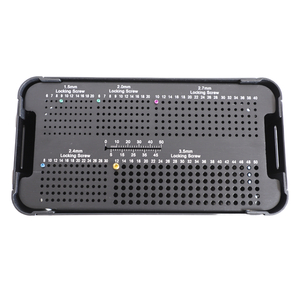
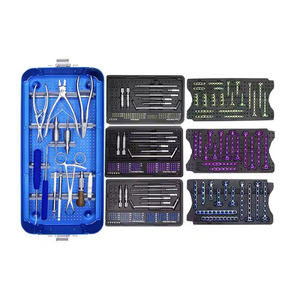
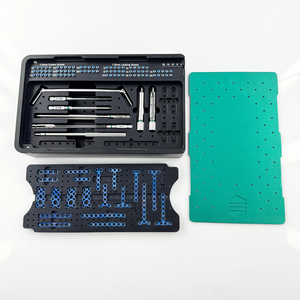
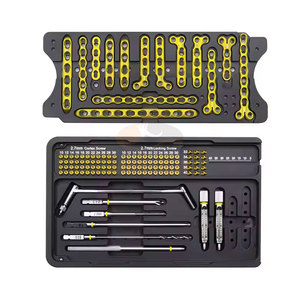
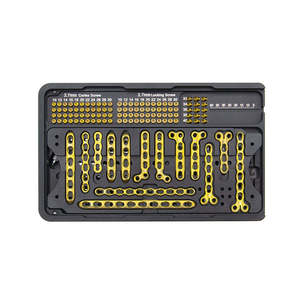
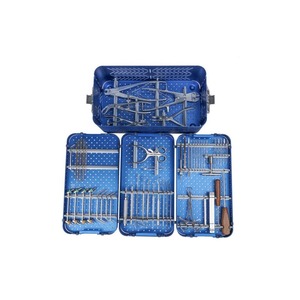
- Demand for Complete Surgical Kits: Serbian hospital purchasing departments prioritize suppliers offering bundled solutions—combining expandable cages, ergonomics insertion instruments, pedicle screw systems, and mini-fragment trauma plates.
Why Uteshiya Medicare / China Premier Manufacturing represents your Ideal Partner
With over a decade of dedicated research, development, and international manufacturing authority, our medical device enterprise stands as a global powerhouse in orthopedic trauma, spinal fusion, and micro-fragment surgical instrumentation. We operate state-of-the-art cleanroom manufacturing units certified under ISO 13485 and regulatory approved by international bodies including CDSCO and CE compliant management systems.
Our facility houses high-precision Swiss 5-axis CNC machining centers, automated wire-EDM cutting, and automated laser surface finishing lines. Every expandable spinal cage undergoes 100% optical dimensional inspection and mechanical stress testing prior to sterile double-pouch packaging.
100% In-House Cleanroom
Class 7 (10,000) certified cleanroom packaging facility maintaining total microbiological sterility and pyrogen-free assurance.
Surgeon-Led R&D Team
Continuous co-development with international orthopedic clinical advisors ensures intuitive instrument ergonomics and dependable intraoperative performance.
Custom OEM / ODM Solutions
Tailored brand packaging, surgical tray design, and custom cage dimensioning for authorized Serbian distributors and tenders.
Frequently Asked Questions for Serbian Importers & Procurement Officers
Clear answers to regulatory, technical, and commercial inquiries regarding expandable spinal cage importation into Serbia.
What regulatory documentation is provided for ALIMS registration in Serbia?
We supply complete technical documentation dossiers required by the Medicines and Medical Devices Agency of Serbia (ALIMS). This includes ISO 13485 certification, CE Certificates of Conformity, ASTM F2077 dynamic biomechanical test data, biocompatibility reports (ISO 10993), and clinical evaluation summaries.
How do your expandable spinal cages prevent intraoperative subsidence in osteoporotic bone?
Our expandable cages feature broad endplate contact footprints with optimized surface area distribution. Additionally, continuous expansion allows surgeons to apply precise, tactile vertical distraction without exceeding subchondral bone yield strength, significantly outperforming aggressive static cage impaction.
What surgical approaches do your expandable cage systems support?
We manufacture expandable interbody cages optimized for TLIF (Transforaminal Lumbar Interbody Fusion), PLIF (Posterior Lumbar Interbody Fusion), and LLIF/DLIF (Direct/Lateral Lumbar Interbody Fusion) approaches, complete with dedicated insertion, articulation, and expansion instrumentation.
What is the typical shipping lead time to Belgrade, Nis, or Novi Sad?
Standard export orders are dispatched via door-to-door air freight (DHL/FedEx/Air Cargo) directly to Belgrade Airport (BEG) within 7–14 business days depending on order size and customization requirements. Expedited freight options for national tenders are readily available.
Are the products supplied sterile or non-sterile?
We offer both option sets: Gamma-sterilized medical-grade double blister packaging ready for immediate OR deployment, or non-sterile bulk packaging for hospital steam autoclaving in reusable anodized surgical trays.