Specialized Surgical Implants & Modular Trauma Systems
Precision-Engineered Titanium & Stainless Steel Solutions for Spinal & Orthopedic Surgeons
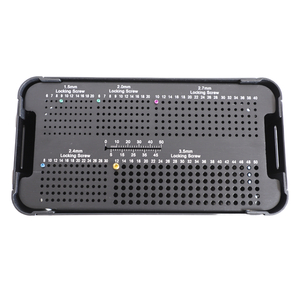
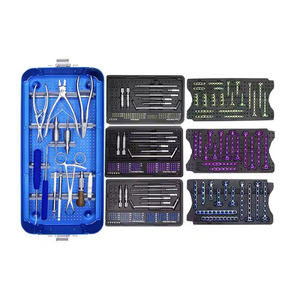
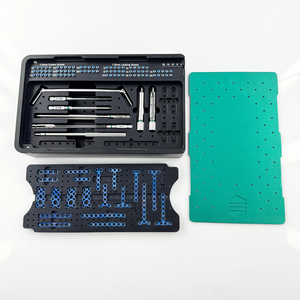
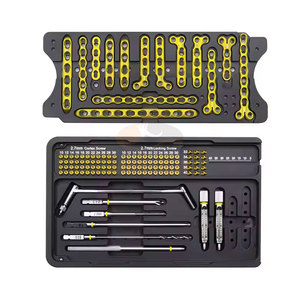
Executive Whitepaper: The Evolution of Expandable Spinal Interbody Cages in the Netherlands Spine Surgery Ecosystem
The Netherlands surgical market represents one of the most sophisticated, outcome-driven, and highly regulated healthcare environments in Western Europe. Dutch orthopedic surgeons, neurosurgeons, and hospital procurement boards (operating within academic centers such as Radboudumc, Erasmus MC, and specialized centers like Sint Maartenskliniek) place extraordinary emphasis on biomechanical efficiency, long-term fusion rates, and minimal disruption to the paravertebral musculature.
In recent years, the clinical transition from static Transforaminal Lumbar Interbody Fusion (TLIF) and Posterior Lumbar Interbody Fusion (PLIF) cages toward dynamic, expandable interbody cage technology has accelerated across Dutch medical centers. Static PEEK (Polyetheretherketone) and traditional titanium cages, while historically effective, present inherent clinical trade-offs: insertion requires significant neural retraction, impaction forces can damage the vertebral endplates, and fixed cage heights often fail to restore patient-specific lordotic alignment or prevent subsidence.
Why Dutch Orthopedic Procurement Demands Advanced Expandable Implant Engineering
Dutch hospital purchasing combines stringent Value-Based Healthcare (VBHC) metrics with strict European Union Medical Device Regulation (EU MDR 2017/745) mandates. Implants imported into the Netherlands must demonstrate superior fatigue resistance (ASTM F2077 / ASTM F2267 standards), minimal stress shielding, optimized bone graft packing capacities, and pristine surface topographies conducive to rapid osseointegration.
As a leading international manufacturer and direct global exporter, our expandable spine systems and modular mini-fragment trauma plates integrate medical-grade Titanium Alloy (Ti-6Al-4V ELI) and implant-grade 316L Stainless Steel. Engineered via high-precision 5-axis CNC machining, our spine implants provide Dutch surgical teams with exact tactile control, self-locking expansion mechanisms, and seamless radiolucent footprint imaging.
Core Technological Pillars of Our Expandable Spine Platforms
Engineered for Dutch Hospitals, Outpatient Surgical Centers (ZBCs), and Global Clinical Standards
Stepless Mechanical Expansion
Continuous internal gear drive mechanism enables precise, infinitely variable height adjustment under direct tactile feedback, eliminating abrupt mechanical increments.
Porous Titanium Osseointegration
3D matrix-structured surface geometry mimicking human trabecular bone (65-75% porosity) optimizes cellular attachment and accelerates early bone ingrowth.
Anti-Backdrive Locking System
Patented automatic multi-tooth tactile lock prevents post-operative loss of disc height under cyclic physiological loads exceeding 3,000 N.
Maximized In-Situ Graft Volume
Hollow central chamber design permits post-expansion autologous or synthetic bone graft packing directly through the insertion funnel to ensure 360° endplate contact.
Restoration of Sagittal Balance
Integrated anatomical lordotic options (0° to 15°) allow Dutch surgeons to reconstruct global sagittal alignment in degenerative scoliosis and spondylolisthesis.
Minimal Nerve Retraction Footprint
Ultra-low insertion profile reduces the risk of nerve root impingement during minimally invasive MIS TLIF pathways, preserving posterior neural structures.
Biomechanical Data Visualization: Expandable Cages vs. Static Cages
To assist Dutch healthcare procurement committees, biomedical engineers, and spine surgeons in assessing Information Gain and clinical outcomes, the comparative performance matrix below contrasts our expandable interbody systems against conventional static interbody fusion cages:
| Clinical & Technical Parameter | Traditional Static Cages (PEEK/Ti) | Our Expandable Titanium Cages | Dutch Clinical Impact & Benefit |
|---|---|---|---|
| Insertion Footprint | Full final height (10mm–14mm) | Collapsed minimal profile (7mm–9mm) | Reduces nerve root traction by up to 45% during MIS TLIF |
| Endplate Impaction Risk | High risk of micro-fracture during insertion | Zero impaction force during expansion phase | Significantly lowers risk of post-op cage subsidence |
| Lordotic Alignment Correction | Fixed angle (Preset 0°, 4°, or 8°) | Dynamic continuous lordosis (0° to 15°) | Restores physiological lumbar lordosis tailored to patient MRI |
| Post-Expansion Graft Capacity | Pre-packed only; static cavity | In-situ expandable packing cavity (up to 3.2cc) | Ensures direct graft-to-endplate contact for faster fusion |
| Modulus of Elasticity | PEEK: ~3.6 GPa / Solid Ti: ~110 GPa | Porous Ti Matrix: ~1.5 - 3.0 GPa | Matches natural trabecular bone, suppressing stress shielding |
| Regulatory Compliance | Variable EU MDR documentation | Full EU MDR technical file + ISO 13485 | Accelerated Dutch CE compliance & hospital procurement approval |
Localized Clinical Application Scenarios Across Dutch Hospitals & ZBCs
The healthcare architecture of the Netherlands is characterized by a high concentration of specialized orthopedic clinics (Zelfstandige Behandelcentra - ZBCs) operating alongside academic medical centers. Clinical pathways dictate low length-of-stay (LOS) metrics, rapid patient mobilization, and minimal re-operation rates. Our expandable spinal interbody cages and mini micro fragment locking systems are precisely aligned with these regional requirements across key clinical scenarios:
1. Minimally Invasive Transforaminal Lumbar Interbody Fusion (MIS TLIF)
In outpatient surgical facilities across Amsterdam, Rotterdam, and Utrecht, surgeons increasingly utilize tubular retractor systems to perform targeted decompression and fusion. Our expandable cages are designed to pass effortlessly through narrow 16mm-18mm working channels. Once positioned within the anterior disc space, controlled mechanical expansion restores intervertebral height without tearing adjacent soft tissues or irritating the exiting nerve root.
2. Complex Revision Spine Surgeries & Subsidence Management
Revision cases involving osteopenic bone or previously failed static implants present severe anatomical challenges. The expanded footprint and high surface friction of our porous titanium expandable cages distribute axial loads broadly across the peripheral cortical rim of the vertebral body. This mechanical load sharing prevents cage sinkage (subsidence) into compromised cancellous bone.
3. Small-Bone Trauma & Reconstructive Hand/Foot Surgeries
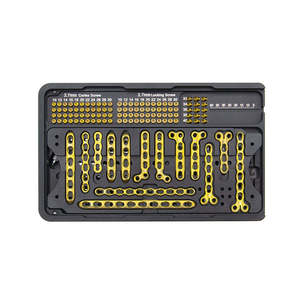
Complementing our spinal technology, our 1.5mm, 2.0mm, 2.4mm, and 2.7mm Mini Micro Fragment Locking Plate Systems (as highlighted in our product showcase above) serve Dutch trauma units in managing complex periarticular fractures, maxillofacial trauma, and veterinary orthopedic applications. Manufactured from biocompatible 316L Stainless Steel and Grade 5 Titanium, these modular systems feature anatomical contouring, low-profile screw heads, and specialized locking screw geometry that maintains rigid angular stability even in osteoporotic bone.
Netherlands Market Trends & Regulatory Compliance (EU MDR 2017/745)
Navigating the European surgical device market requires unyielding dedication to quality management, clinical safety data, and environmental sustainability. Netherlands medical device purchasing boards operate under strict guidelines overseen by the Health and Youth Care Inspectorate (IGJ) and the Ministry of Health, Welfare and Sport (VWS).
Strict Alignment with EU MDR 2017/745 Guidelines
The transition from MDD to EU MDR has created supply shortages across European hospitals. As a certified global manufacturer with a robust international regulatory team, we ensure that our manufacturing protocols, post-market surveillance (PMS), clinical evaluation reports (CER), and Risk Management files (ISO 14971) strictly fulfill all European technical standards. Every expandable cage and trauma locking plate leaves our facility with full lot traceability, material heat certificates, and validated gamma/steam sterilization compatibility.
Green Surgery Initiative & Sustainable Supply Chains
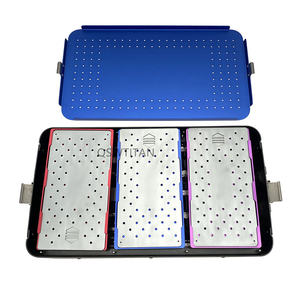
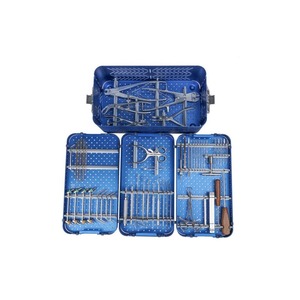
Dutch hospitals are frontrunners in the "Groene Zorg" (Green Healthcare) initiative, aiming to minimize clinical waste and carbon footprints. Our reusable ergonomic instrumentation sets, minimalist modular sterilization trays, and eco-friendly packaging align directly with sustainability procurement criteria implemented by Dutch healthcare purchasing syndicates.
Enterprise Strengths: World-Class Manufacturing Infrastructure
Backed by over a decade of precision engineering expertise, our modern manufacturing facility represents the convergence of high-tier metallurgy, automated CNC machining, and rigorous quality assurance protocols. As a globally recognized supplier serving healthcare professionals in over 30 countries, we maintain an extensive product portfolio spanning over 1,000 certified implants across trauma, spine, craniomaxillofacial (CMF), joint reconstruction, external fixation, and sports medicine.
In-House CDSCO & ISO Sterile Facility
Our dedicated ISO Class 7 cleanroom environment and automated washing/packaging lines ensure pristine implant cleanliness and zero endotoxin levels.
Advanced 5-Axis Swiss CNC Machining
Utilizing high-precision CNC machinery from Switzerland and Japan, we execute complex cage expansion gears and locking plate geometries with sub-micron tolerances.
Custom CT-Scan Patient-Specific Implants
For extraordinary anatomical defects, our biomedical engineering team converts DICOM CT scans into custom 3D-printed titanium implants within rapid turnaround times.
Whether providing specialized 2.7mm Mini Fragment sets for delicate hand surgeries or supplying expandable spinal cages for high-volume spine surgery departments in the Netherlands, our commitment remains absolute: delivering superior biomechanical performance at competitive international export rates.
Frequently Asked Questions (FAQ) for Dutch Purchasers & Surgeons
To address common technical, regulatory, and logistical inquiries from Dutch hospital procurement officers and surgical teams, we have compiled the following detailed FAQ section:
Partner with a Premier Global Spine & Trauma Manufacturer
Elevate your surgical outcomes and hospital procurement efficiency in the Netherlands. Contact our international regulatory and medical sales engineering team today for technical dossiers, CAD specifications, or sample evaluations.