Precision Ankle & Micro-Fragment Implants Showcase
Explore our high-precision titanium and 316L stainless steel internal fixation systems, modular trauma plates, and locking screw instrumentation designed for demanding surgical protocols across Ethiopia.
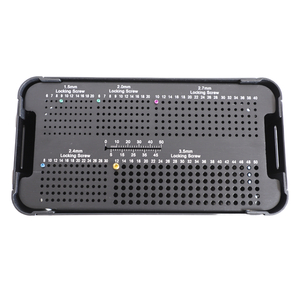
Veterinary Mini Micro Fragment System Stainless Steel Trauma Plates Locking Screws
Ultra-low profile bio-compatible stainless steel trauma locking system engineered for intricate micro-fracture stabilization and specialized anatomical alignment.
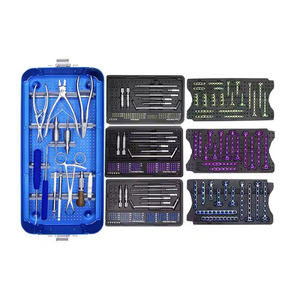
Stainless Steel Manual Mini Micro Fragment Locking Plate System 1.5/2.0/2.4mm Modular Fixation Set CE/ISO13485
Comprehensive modular fixation matrix offering multi-directional locking versatility for distal tibia, fibula, and complex small fragment hand/foot traumatology.
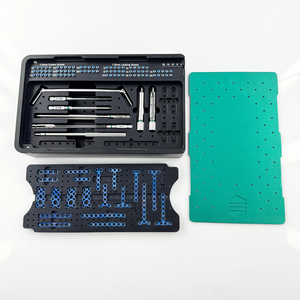
Veterinary 1.5mm Mini Micro Fragment Locking Kit with Titanium Plates, Screws & Surgical Instruments
High-tensile Grade 5 Titanium alloy micro-locking plates designed for maximum biological inertia, accelerated osteointegration, and minimum tissue irritation.
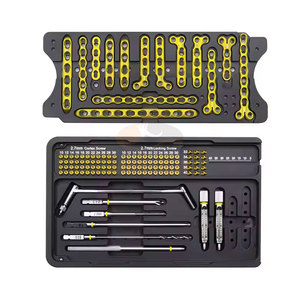
Premium Orthopedic Mini Fragments 2.7mm Stainless Steel Manual Locking Plate Set ISO13485 CE
Precision-engineered 2.7mm anatomical locking plates constructed from implant-grade 316L VM steel, guaranteeing superior fatigue strength during bone healing.
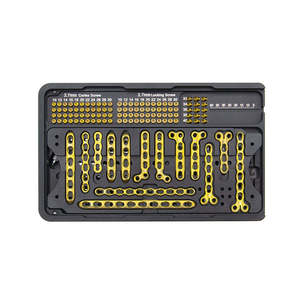
Orthopedic Surgical Instruments Manual Mini Fragments 2.7mm Steel Locking Plate Instrument Set
Ergonomic manual surgical instrument tray featuring quick-coupling torque-limiting drivers, benders, and precision depth gauges for seamless operative workflow.
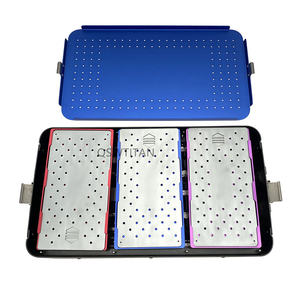
Orthopedic Mini Fragment Instrument Set Plate Screw Implant Locking Plate System for Finger Palm Bones
Specialized reconstructive plate and screw kit tailored for tarsal, metatarsal, finger, and peri-articular ankle micro-fixation with optimal contourability.
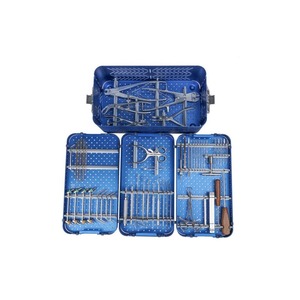
Premium Orthopedic Mini Micro Fragment System Hand Foot Wrist Maxillofacial Surgical Kit
All-in-one surgical module serving trauma centers across East Africa, providing flexible screw choices (locking vs cortex) for complex joint joint-sparing procedures.
Eaven Mini Micro Fragment System Trauma Plate Orthopedic Implants Stainless Steel Locking System
Heavy-duty trauma micro-plate series engineered for rigid fixation in load-bearing extremity zones, supporting complex deformity corrections.
1. Clinical Whitepaper: Biomechanical Paradigm of Total Ankle Replacement (TAR) & Hindfoot Reconstruction in East Africa
End-stage ankle osteoarthritis (OA), post-traumatic arthrosis resulting from high-impact distal tibia fractures, and severe rheumatoid destruction present severe orthopaedic challenges across the Federal Democratic Republic of Ethiopia. Historically, arthrodesis (joint fusion) was the undisputed gold standard for severe talocrural joint pathology. However, modern biomechanical advancements in Total Ankle Replacement (TAR) implants and modular peri-articular micro-fragment locking systems have shifted the clinical consensus toward joint-preserving, motion-retaining operative strategies.
The talocrural joint complex demands intricate load distribution during the heel-strike to toe-off gait cycle, supporting up to 5 times human body weight in axial force. Implanting a third-generation mobile-bearing or semi-constrained fixed-bearing TAR implant requires extreme precision in component alignment, bony resection angles, and soft-tissue balancing. As a premier international manufacturer and exporter, our engineering protocols align strictly with international standard ISO 13485:2016 and CDSCO regulatory frameworks to deliver implants that withstand high physical stress while mitigating aseptic loosening.
Metallurgical Rigor & Surface Tribology
Successful endoprosthetic and traumatology outcomes rely heavily on material selection. Our total ankle components and trauma plating sets utilize two primary medical-grade materials:
- Ti-6Al-4V ELI (ASTM F136) Titanium Alloy: Preferred for tibial and talar components due to its elastic modulus closely matching cortical bone (reducing stress shielding), exceptional fatigue strength, and high biocompatibility. Vacuum plasma-sprayed porous titanium or hydroxyapatite (HA) coatings facilitate rapid primary mechanical fixation and long-term secondary osteointegration.
- Medical Grade 316L / 316L VM Stainless Steel (ISO 5832-1): Utilized extensively in low-profile trauma locking plates, mini-micro fragment systems, and structural compression screws. Premium vacuum-melt processing minimizes carbon content, ensuring superior resistance to intergranular corrosion in tropical and high-humidity climates.
- Highly Cross-Linked Ultra-High-Molecular-Weight Polyethylene (HXLPE): Formulated with vitamin-E stabilization or optimized gamma radiation cross-linking to serve as the articular insert bearing insert. This drastically decreases volumetric wear debris, protecting local Ethiopian patient populations from osteolysis and premature revision surgery.
Strategic Advantages for Ethiopian Healthcare Providers
Delivering whitepaper-level quality, regulatory assurance, and surgical training to orthopedic departments across Addis Ababa and regional zones.
EFDA & International Approvals
Fully compliant with Ethiopian Food and Drug Authority (EFDA) guidelines, backed by international CDSCO, ISO 13485:2016, and FDA registration certificates to streamline hospital procurement.
In-House Sterile Manufacturing
Featuring state-of-the-art Class 10,000 cleanrooms for sterile packaging, guaranteeing zero microbial load and ready-to-use surgical trays directly for Ethiopian operating theaters.
Direct Export to Ethiopia
Optimized logistics network with freight channels to Bole International Airport (Addis Ababa) and Djibouti Port multimodal transport routes, ensuring rapid lead times.
Surgical Instrumentation & Training
Complete precise reamers, resection guides, trial prostheses, and benders supplied alongside hands-on clinical technical workshops for Ethiopian orthopedic surgeons.
2. Localized Clinical Application Scenarios Across Ethiopian Hospitals
Ethiopia’s rapidly evolving medical landscape is characterized by both a growing network of specialized tertiary referral centers and unique regional trauma profiles. Operating in this environment demands implants designed for high mechanical resilience, broad anatomical adaptiveness, and simplified surgical instrumentation sets.
Primary Clinical Ecosystems & Tertiary Institutions
Our products and TAR implant systems are designed to cater to leading health institutions across the country:
- Tikur Anbessa Specialist Hospital (Black Lion Hospital, Addis Ababa): As the premier teaching hospital and home to Addis Ababa University’s Department of Orthopedics, Tikur Anbessa manages complex, neglected ankle traumas and post-infectious joint destruction. Implants must support extensive structural bone grafting and modular length restoration.
- St. Paul's Hospital Millennium Medical College: A key hub for high-volume trauma and joint reconstruction. The integration of our 2.7mm locking compression plates and micro-fragment systems allows surgeons to achieve rigid fixation in peri-articular distal tibia and calcaneal fractures.
- CURE Hospital Ethiopia & MCM General Hospital (Myungsung): Centers specializing in pediatric, adolescent, and adult reconstructive limb deformities. These centers require low-profile titanium hardware to perform precise osteotomies and joint alignments without causing skin breakdown or soft tissue necrosis over vulnerable bony prominences.
- Regional University Referral Centers (Hawassa, Jimma, Gondar, Ayder-Mekelle): Regional hospitals face heavy caseloads of high-energy agricultural injuries and transport-related trauma. Our comprehensive mini-micro fragment sets function as versatile workhorses for combined foot, ankle, and hand stabilization.
Specific Etiological & Surgical Scenarios in Ethiopia
Surgical intervention in the Horn of Africa frequently encounters unique clinical presentation patterns:
- High-Impact Transit & Road Traffic Trauma: The expansion of major arterial highways (e.g., Addis Ababa-Adama Expressway, Ethio-Djibouti Corridor) has elevated the incidence of severe pilon fractures, open talar dislocations, and comminuted malleolar fractures. Dual-plating protocols combining 2.7mm and 3.5mm locking compression plates stabilize the articular block while maintaining soft tissue viability.
- Agrarian & High-Altitude Physical Stress: Rural Ethiopian populations engage in strenuous agrarian labor across mountainous terrain. Ankle prostheses and fusion fixators must demonstrate exceptional fatigue resistance under persistent axial load and torsional force.
- Management of Neglected & Mal-united Fractures: Delayed presentation is a common challenge in regional zones. Reconstructive procedures often necessitate extensive joint debridement, structural bone grafting, and specialized variable-angle locking plates to restore physiological hindfoot alignment.
3. Localized Development Trends & Procurement Dynamics in East Africa
The healthcare sector in Ethiopia is undergoing structural transformation guided by the Ministry of Health (MoH) Health Sector Transformation Plan (HSTP). Key trends shaping orthopaedic implant procurement include:
EFDA Regulatory Harmonization & Quality Mandates
The Ethiopian Food and Drug Authority (EFDA) has instituted stringent registration guidelines under Proclamation No. 1112/2019. Medical device importers and foreign manufacturers must provide comprehensive Technical Documentation Files (TDF), proof of ISO 13485 certification, Plant Inspection reports, and Certificate of Analysis (CoA) for every lot. Uteshiya Medicare provides complete regulatory dossiers, drastically reducing registration lead times for Ethiopian distributors.
Financial Realities: Foreign Exchange & Cost Efficiency
Foreign currency (Forex) allocation managed through the Commercial Bank of Ethiopia (CBE) and private commercial banks necessitates high cost-to-performance efficiency. While Western European and North American implants carry prohibitive costs that limit their deployment in public hospitals, high-tier Indian manufacturers offer an ideal balance. By pairing CDSCO and FDA-registered manufacturing with competitive export pricing, Ethiopian healthcare providers can maximize their surgical throughput within strict budgetary constraints.
4. Uteshiya Medicare Manufacturing Excellence & Technical Capabilities
As a globally recognized leader in orthopaedic solution manufacturing, Uteshiya Medicare operates state-of-the-art facilities equipped with advanced CNC 5-axis machining centers, Swiss-type automatic lathes, and high-precision wire electrical discharge machining (EDM) equipment. Our quality management ecosystem guarantees absolute dimensional fidelity and metallurgical consistency.
5-Axis Precision Machining
Allows multi-surface sculpting of complex anatomical articular surfaces and continuous-angle locking screw holes with tolerances under 5 microns.
Type II Anodization & Passivation
Surface treatment enhances titanium wear resistance, prevents cold welding of locking screws to plate holes, and color-codes instrument sizes.
Class 10k Cleanroom Packaging
In-house ISO Class 7/8 (Class 10,000) cleanroom facility offering ethylene oxide (EO) and gamma radiation pre-sterilization for immediate surgery.
Partner With India's Leading Orthopedic Implants Exporter
Expanding your medical supply business or equipping a hospital facility in Addis Ababa, Dire Dawa, Hawassa, or Mekelle? Get in touch with our international trade and regulatory team today for hospital tenders, wholesale catalogs, and customized product quotes.
Frequently Asked Questions (FAQ) – Ethiopian Procurement & Clinical Use
Addressing critical questions regarding EFDA compliance, Letter of Credit (LC) payment methods, shipping logistics, and surgical support in Ethiopia.
Equip Your Hospital with Industry-Leading Orthopedic Technology
Uteshiya Medicare is committed to advancing surgical patient outcomes across Ethiopia and the Greater Horn of Africa through precision engineering, uncompromising quality control, and reliable international trade partnerships.